
 Weather: 614-526-6500

A beginner drill should target the skill that's giving the player trouble. An easy, catchable throw or clean contact off a tee gives the player a concrete first target. Increase the challenge after the player controls that action; simplify or stop an unsafe drill.
No batting cage or elaborate training plan is necessary at the beginning. One player may throw accurately but struggle with the return catch; another may hit off a tee and run toward the wrong base. The troublesome part of the play tells you what to practice.
The five baseball skills every beginner needs
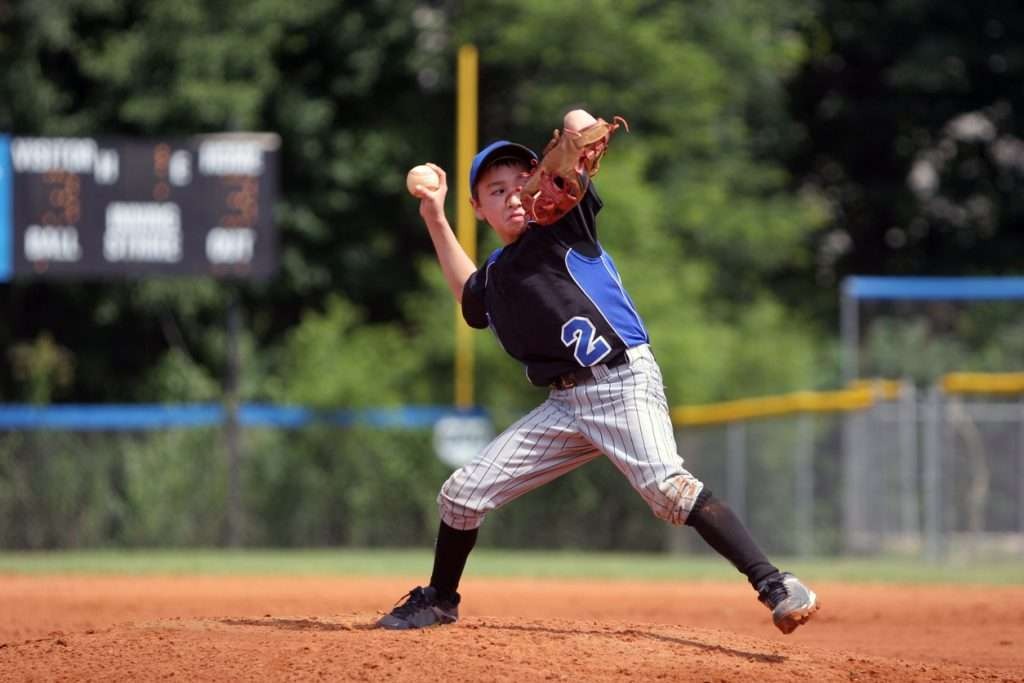
Little League's fundamentals series teaches throwing, catching, hitting, fielding a ground ball, and base running in separate demonstrations. Together they cover what a beginner needs to take part in a play.
- Throwing: Get the ball to a teammate or a target.
- Catching: Follow a thrown ball and secure it with the glove or hands.
- Hitting: Make solid bat-to-ball contact, starting from a setup that stays still.
- Fielding: Get in position for a batted ball, collect it, and get ready for the next action.
- Base running: Know the route and where to go after you hit.
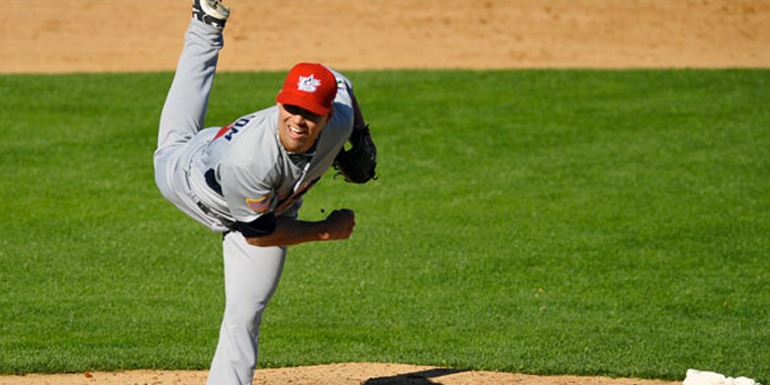
Each skill can be isolated and practiced with gentler activity or modified equipment. A small, observable goal gives the player something to improve during the next few attempts.
Start with the skill that breaks down first
One attempt can reveal the next teaching priority: Where did the ball go? Could the player receive it? Which base did the runner choose? For forces and tag-ups, see first, read the play: base, outs, ball and force.
| What goes wrong? | First exercise | What you should see | Adjustment |
|---|---|---|---|
| Throw misses the target | Gentle throw at a nearby target | Ball lands where a partner could catch it | Move closer; later move the target |
| Catch slips away | Slow, easy toss from a partner | Player tracks the ball and holds on to it | Slow the toss; later change its path |
| Bat misses a stationary ball | Ball on a stable tee | Bat meets the ball | Move the ball to where the player can reach it; later try a managed toss |
| Ground ball rolls past | Gently rolled ball | Player gets in front and stops it | Roll it slower; later change the angle |
| Runner picks the wrong base | Walk the marked bases in order | Player reaches the right next base | Call out the next base; later cut the prompts |
One parent described a ten-year-old who struggles to make contact:
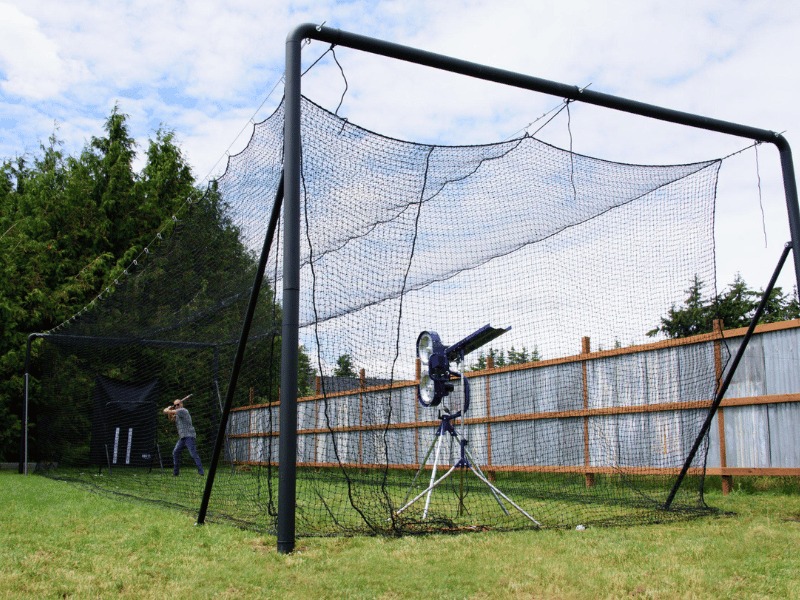
My son is 10 playing with a mix of ages up to 12. & he's struggling to make contact with the ball. I can see some of the issues he's having but as a dad who never played ball, trying to teach him some tips is proving difficult when he thinks I have no clue what I'm on about. ... I've looked at a ton of YouTube videos which are helpful but there are so many that I'm struggling to put some drills together for him to work on to lock down his routine at the plate. We don't really have access to batting cages where we live, so it'll be hitting off a tee into a net in the back garden. As much as he's working hard on his fielding, the confidence he gets when that goes well disappears when you swing and miss at the plate regularly.
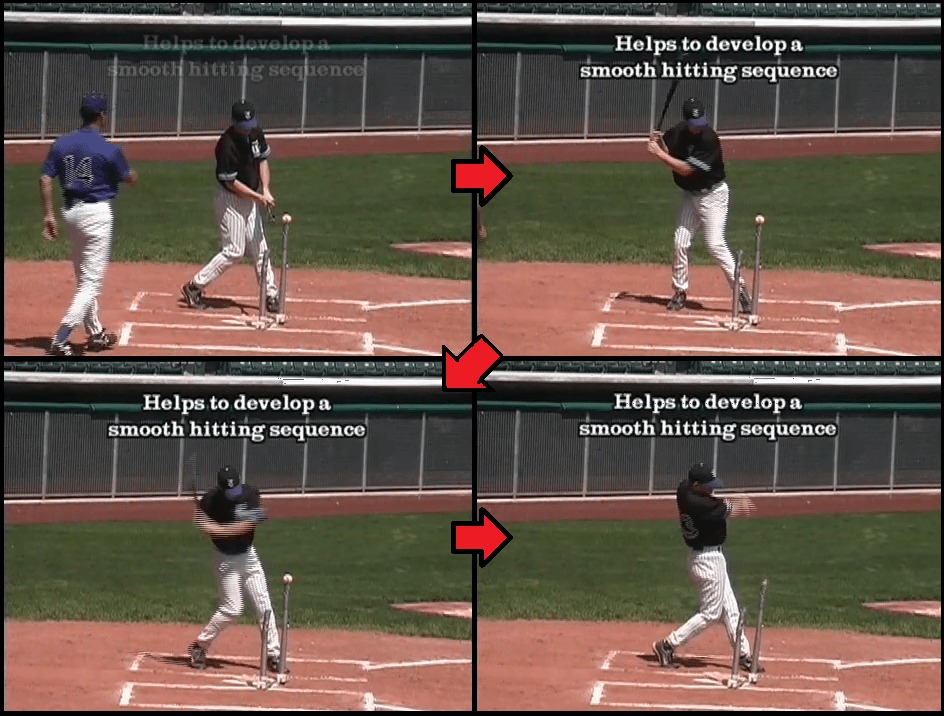
At this stage, success means contacting a stationary ball. Swing mechanics can wait until you've seen whether the tee drill produces that basic result.
Learn to throw and catch without rushing the ball

Begin with a gentle exchange at a distance both players can handle. The thrower faces the receiver, uses a comfortable grip and balanced stance, and aims for a spot the receiver can reach. The receiver gets ready, follows the ball into the glove or hands, and secures it before returning it.
If the ball comes too fast or too far for the receiver, move closer or slow the toss. The catcher gets a better look at the ball, and the thrower gets a more realistic target.
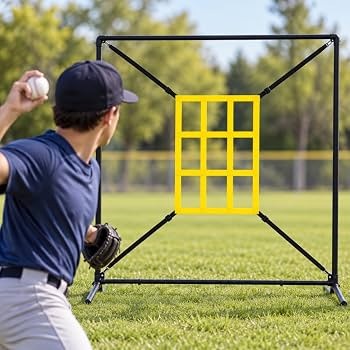
You can also throw at a visible target without a partner. Little League's Tee Ball activities include Team Throwing toward a hoop and Hit the Bucket. A target shows where the ball went, even when another beginner can't catch every throw. Partners, gloves and release mechanics get a full walkthrough in make a controlled throw toward the glove.
Pitching has its own limits. Pitch Smart publishes age-specific pitching limits and rest guidance. The exercises here cover ordinary throwing and receiving only.
The throwing and catching guide covers technique and progressions in more detail.
Make contact before chasing a perfect swing
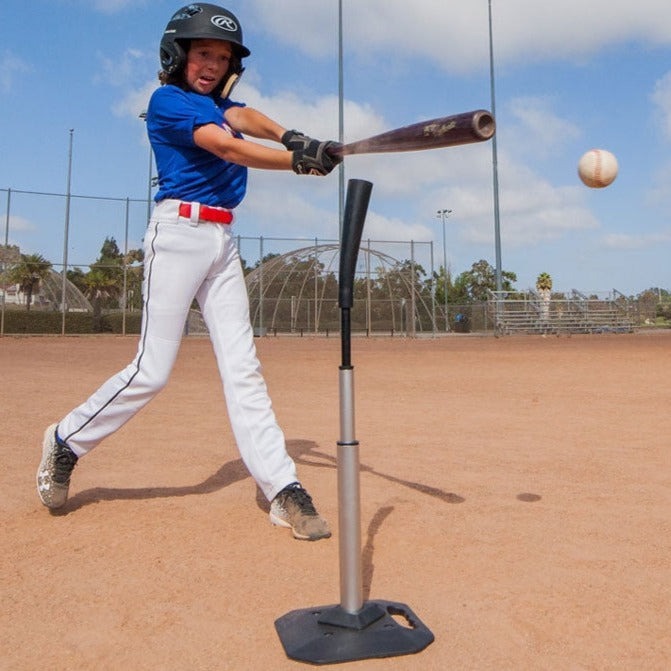
A ball that stays still gives a beginner a clear hitting task. Set a stable tee at a position the hitter can reach comfortably, use a suitable bat and a batting helmet, and keep the whole swinging area clear of other people. A responsible adult should run the setup and any moving-ball practice. The full walkthrough for batting tees, plate reach and swing timing is how to learn to make contact on a batting tee.
A comfortable stance, eyes on the ball, and a controlled swing are enough for this first drill. Repeated misses call for a look at tee position, visibility, and reach before adding mechanical cues.
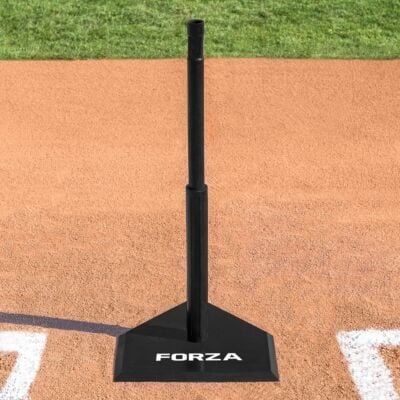
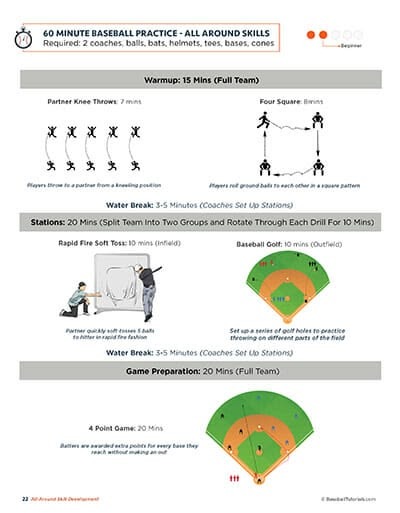
Once contact on the tee is steady, try a carefully managed toss to introduce the timing of a moving pitch. Expect to return to the tee for a while, since a moving ball is a new challenge. A backyard net makes contact practice possible without a batting cage, as long as you control the batting area and the path of the struck ball. Batting stations and fielding drills for first-timers are laid out in the 60-minute first baseball practice plan.
Stance, swing path and timing are covered in the beginner hitting guide.
Field a slow ground ball before a fast hit
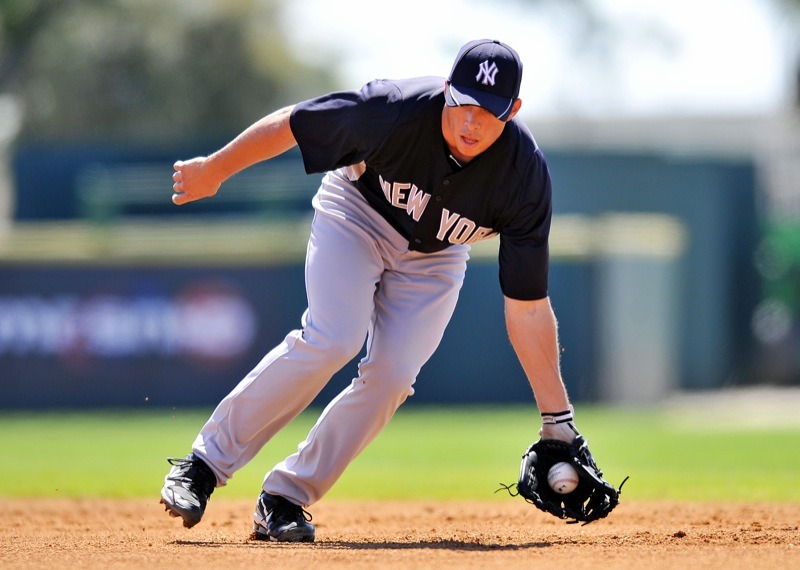
Start a beginner with a ball that rolls slowly and predictably. Have a helper roll it along the ground. The player gets into a ready position, follows the approaching ball, moves in front of its path and uses the glove with a supporting hand to stop it.
Fielding doesn't end when the ball is stopped: the next decision is where to throw. For the full sequence, see how to field a routine ground ball.
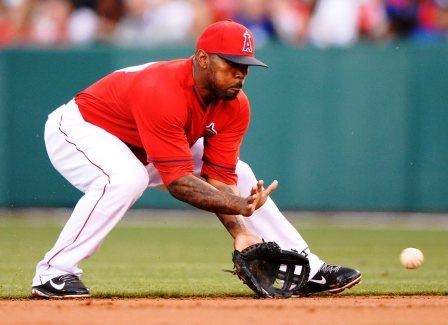
Little League's Tee Ball activities use a two-hand scooping action. After seeing the demonstration, the beginner handles a gentle roller; once they secure it, a controlled throw to a stationary target connects the two movements.
The beginner fielding guide adds more varied ground balls and fly balls.
Learn the base path before running faster
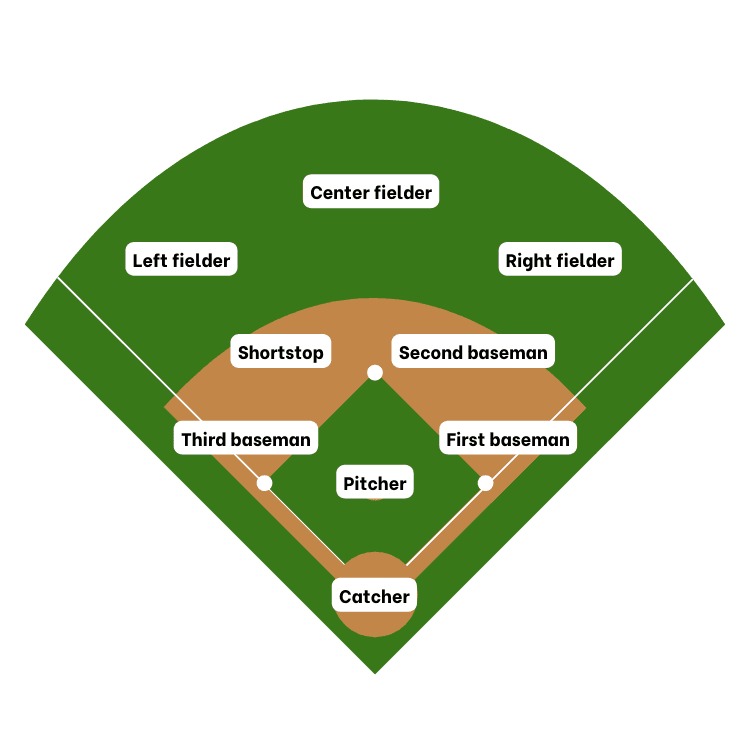
The base path runs from home to first, second, third, and home again. A helper can call out each stop as a newcomer walks or jogs the route after a hit. The base-running guide introduces the more difficult decisions about holding and advancing.
Turn the fundamentals into a short, useful practice
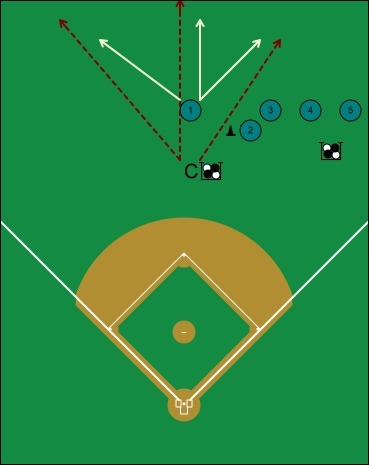
A simple beginner session has three parts: a gentle throwing-and-catching exchange, a few tries at the skill you chose from the table, and a short game-like action with a target or marked bases. Keep everyone active and the purpose of each exercise obvious.
| Setting | Useful arrangement | Plan around |
|---|---|---|
| Home with one helper | Gentle toss, visible target or supervised tee | Open space and a safe path for the ball |
| Small youth group | Short turns at separate skill stations | Enough supervision; throwing and batting areas kept apart |
| No full diamond | Marked base route or simple grounder exercise | The space you have |
| Organized team | Skills followed by a simple game situation | Team goals, coaching staff and field access |
With one helper, stay in one area. With a group, use separate stations if you have the adults and space to supervise each one safely.
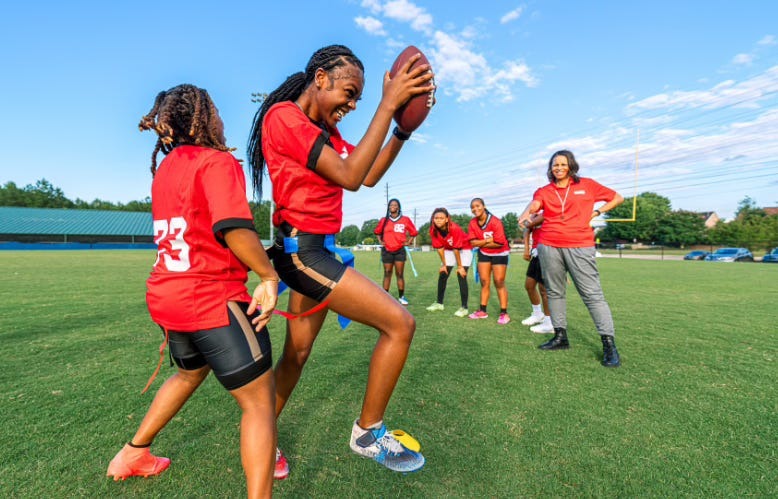
Team programs show how much structure is possible when fields and coaches are available. The Little League Tee Ball Curriculum runs ten weeks with one practice and one game per week, drawing on up to 40 activities.
Raleigh Parks' Tee Ball plan for ages 5 to 6 runs a 90-minute coached session: warm-up, throwing and catching, hitting, fielding, base running, then a game and cooldown.
One commenter described an early-season arrangement for the youngest players in a coach-pitch program:
Beginning of the year the youngest kids we will actually practice for 45 minutes (sharing a field) then play a game for 45 minutes to ensure we have time to touch on the basics quickly frequently to start the year.
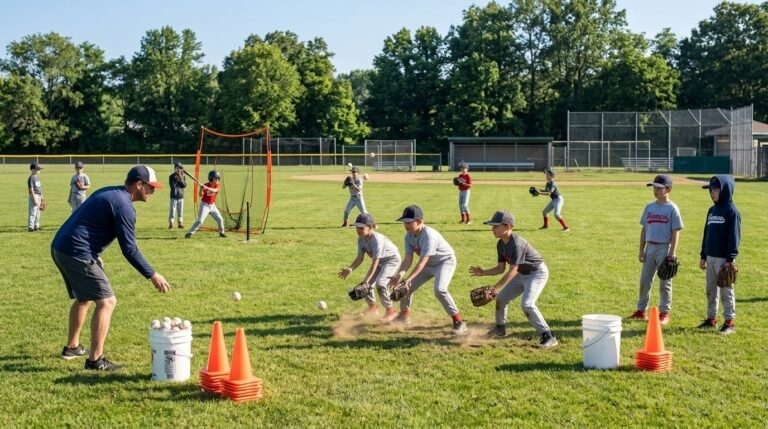
A whole-team schedule is available in the first youth baseball practice plan. For differing experience levels within a group, the mixed-ability practice adjustments offer more individual variations.
Know when to adjust a drill and when to stop
Steadier attempts show that the current exercise is working. Once the movement becomes repeatable, introduce a small game-like challenge without changing everything at once.
Stop when the activity puts other people in the path of the bat or a thrown ball, or when someone gets hurt. A hard or improvised impact drill is no substitute for a safe beginner hitting setup.

If you suspect a concussion, CDC HEADS UP says to remove the athlete from play immediately, keep them out for the rest of that day, and get clearance from a healthcare provider before they return. If concussion danger signs appear, seek emergency-department care immediately. Never use another drill to decide whether an injured athlete is ready.