
 Weather: 614-526-6500

A first practice for young tee-ball or coach-pitch players can fit into an hour: movement, gentle throwing, fielding, a supervised hitting lane, and a short finish. This beginner schedule assumes enough approved adults and safe space; otherwise, keep the team together. The league's rules and the day's field conditions still govern the setup.
The 60-minute first baseball practice plan
At the field, a coach needs answers to simple questions: where do the children gather, who watches each activity, and what happens when a drill runs long? The sample assumes mixed-experience players around ages 5 to 8, a tee, protective equipment, and space the coach can supervise.
The schedule uses six blocks totaling 60 minutes. Each has a fallback for when another station would stretch the available supervision.
| Time | Activity | What to tell the players | Safety or fallback |
|---|---|---|---|
| 0 to 5 min | Meet the team | Say your name, learn the stop signal, and see where to wait. | Keep the field rules even if practice starts late. |
| 5 to 15 min | Move and learn the bases | Follow me around the bases and stop when I call. | Keep bats put away during group movement. |
| 15 to 25 min | Throw and receive | Face your target. Try a short, gentle throw or a roll. | Use coach-to-player tosses or rolls if partner throwing is too early. |
| 25 to 45 min | Tee hitting and ground balls | Take a turn at the tee, then practice gathering rolled balls. | Work one activity at a time unless separate groups each have an adult and enough space. |
| 45 to 55 min | Apply one skill | Run to the base I call, or try one simple play with me. | Pick a no-bat activity if another hitting round isn't practical. |
| 55 to 60 min | Finish and dismiss | Name one skill we practiced, then finish together. | Stay with the kids until every one is picked up. |
Slot water breaks between activities, especially after movement and before the longer skill block. Add more when conditions call for it. Little League advises new coaches to allow plenty of water breaks while keeping activities moving.
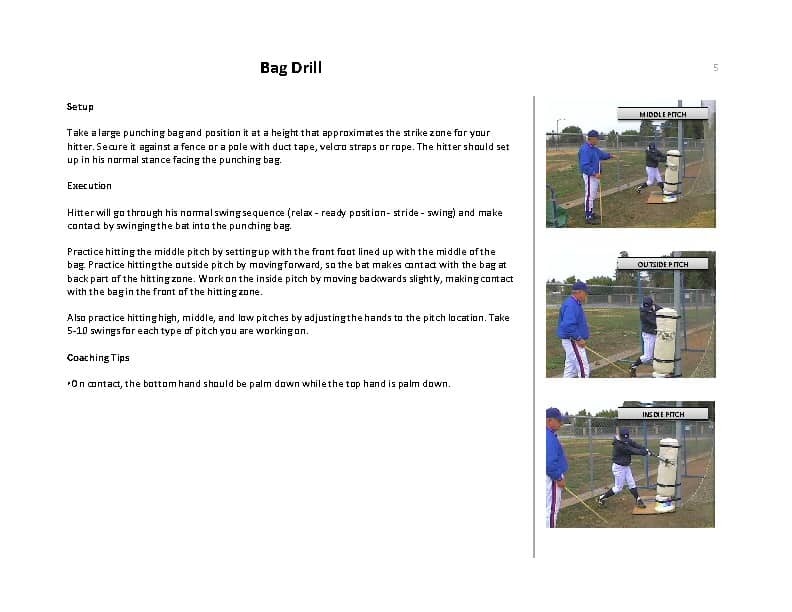
Keep the schedule on a phone or index card so you can see the next activity without having to invent one in front of the team.
Before players arrive: equipment, parent contact, and one simple goal
Before the field gets busy, work through the list below. It covers your equipment, your helpers, and the one skill or rule you want the children to remember.
Here's how one first-time coach put it:
I’m new to this, have some baseball experience but am a little nervous about running my first practice. Signed up because they needed coaches badly. And my son asked me to coach his team. I know a big part is getting the kids to have fun and enjoy it, I’m just wanting help from anyone who has done this many times and can give some solid advice on what they would do on the very first practice. Any help is appreciated! Thank you.
Knowing baseball isn't enough. Sort these out before practice:
- League and facility: Confirm the age division, assigned field, child-safety and weather procedures, emergency arrangements, and rules for approved helpers.
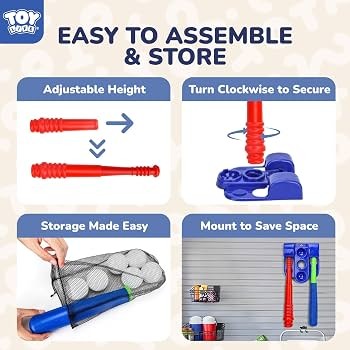
- Equipment: Check the tee, bat, properly fitting batting helmets, baseballs, gloves as needed, four bases or markers, and cones for boundaries. Confirm what the league already supplies before buying anything.
- Water and first aid: Know where the drinking water and first aid are, and your league's emergency contact procedure.
- Adults: Decide which adults can supervise under league policy and agree on their roles before the session.
- Family logistics: Tell families where children wait, how pickup works, and where to raise an accommodation or participation need.
- One goal: Pick a result you can see, such as every child recognizing the stop signal and finding first base.
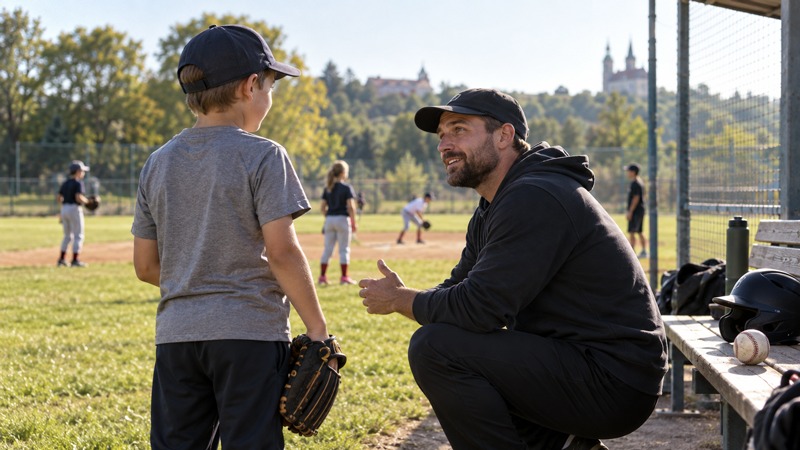
Give an authorized assistant a specific role, such as ground-ball work, once you've marked the area and demonstrated the drill. A parent on the sidelines is an observer until the league's authorization and safeguarding requirements allow a supervisory role. For more on station setup, see build only as many practice stations as you can supervise.
When players arrive, give a quick welcome and one clear command, such as “Gloves down, eyes here.” Keep the welcome short so the first movement activity gets its time.
Mark the batting, throwing, and waiting areas before any swings
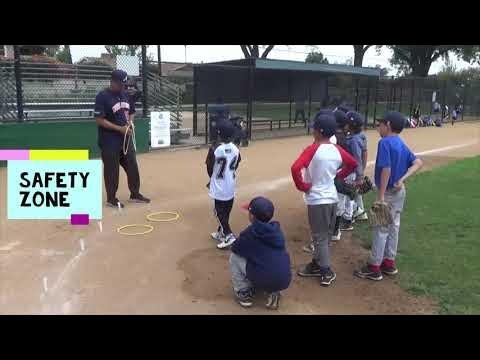
Before anyone picks up a bat, separate the hitter's swing area, the waiting boundary, and the path of any thrown or batted ball. You should see the active hitter and account for every child waiting nearby.
Walk the area and look for uneven ground, obstructions, stray equipment, lighting problems, and anything blocking the route between activities. Then set up these zones:
- Batting lane: One helmeted hitter swings while you watch directly. You control when bats are picked up and when a swing starts.
- Waiting boundary: Children waiting for a turn stay behind a line you've shown them, with no bats in their hands.
- Ball collection: You decide when the swing area is closed and balls can be retrieved. Nobody runs in for a ball during an active swing.
- Second skill area: Run throwing or fielding separately only when approved adults can supervise it and ball paths can't cross the batting lane.
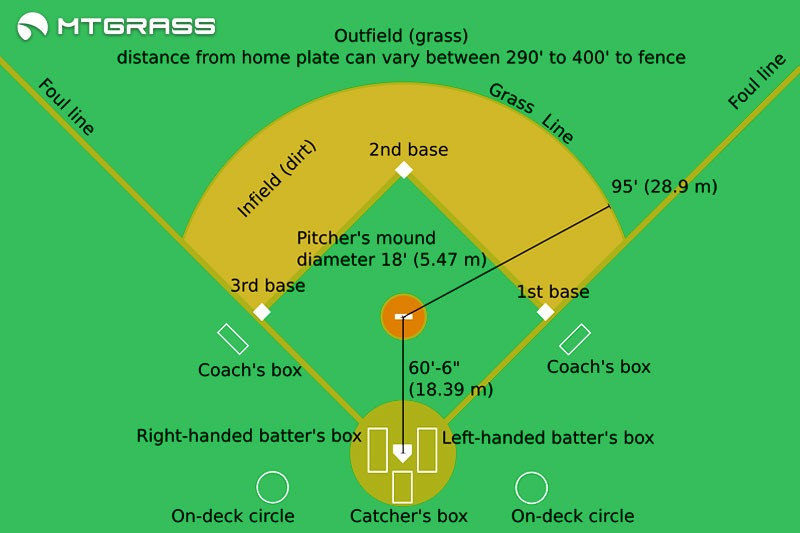
Little League's Appendix B safety code covers field inspections, practice spacing, equipment checks, and bat control.
In Little League activities, batting helmets must meet the NOCSAE standard, and catchers must use specified protective equipment. Other organizations follow their own rules. For throwing partners, catching gloves, and release mechanics, see make a controlled throw toward the glove.
Little League Tee Ball, Minor League, and Major League divisions prohibit on-deck batters. This beginner session needs no improvised catcher position, so skip that role unless the required equipment and safe arrangements are in place.
Weather can stop an activity or the entire session. The National Weather Service advises hydration, watching for heat illness, and using cooler periods for children's outdoor activity. Follow your local league's procedures for unsafe conditions, including lightning.
If you suspect a concussion, remove the player from play immediately. The CDC's HEADS UP response guidance says the athlete must not return to play that day and needs healthcare-provider clearance before returning. Emergency danger signs need urgent medical attention.
What to teach first: bases, catching, ground balls, and the tee
Start with these four skills. Give one cue at a time and let players try it before you add detail.
- Bases: Walk the bases together, then call one base at a time so players practice moving and stopping. Demonstrate running through first base according to the league's field instructions.
- Catch: Show a short, gentle throw toward a target. Use coach-controlled rolls for players who are still learning to receive a ball.
- Ground balls: Cue “Watch it, get behind it, gather it.”
- Tee: Demonstrate a comfortable stance and let one helmeted child swing while you watch and the others stay clear.
These activities come from Little League's introductory Tee Ball program.
One coach or three? Choose stations from your actual help
Count only adults your league allows to supervise an activity. A station needs an adult who knows the drill and enough field space to keep players and balls apart. For more on rotations, coaches, and practice space, see how many supervised stations can you run.
| Approved adults | Setup | Condition |
|---|---|---|
| One | One group moving through activities one at a time | Every child stays visible. |
| Two | Up to two stations | Hitting and fielding areas have separate safe paths and an adult each. |
| Three or more | Up to three stations | Each has an authorized adult, equipment, and safe spacing. |
These layouts are examples. Your league's safeguarding policy and field conditions decide which one you can use.
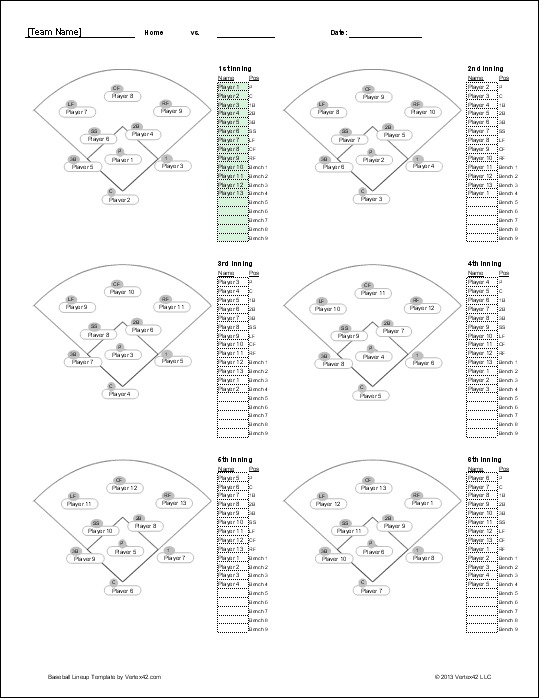
Here's how one experienced commenter would run it, with parents taking defined roles and groups rotating between fielding and catch work:
Have a plan but be flexible. I usually start with stretching and do introductions during this time. Then run the bases. Home to first, first to third, them bring it back home. Grab some water and get back out for stations. Call some of the parents this weekend and convince them to run a station. There's always parents willing to help, but they won't step up until you ask. I try to get three stations going at least, so you'll need two assistants and give them the easiest jobs first. Have one doing glove work in right field, another doing no glove catch with tennis balls or wiffles in left field. You can do some infield work or a specific drill you want to work on. Rotate after 5-10 minutes then break for water and come back for a scrimmage. Change up the stations week to week, keep it fun.
The one-tee problem: keep beginners from standing in line
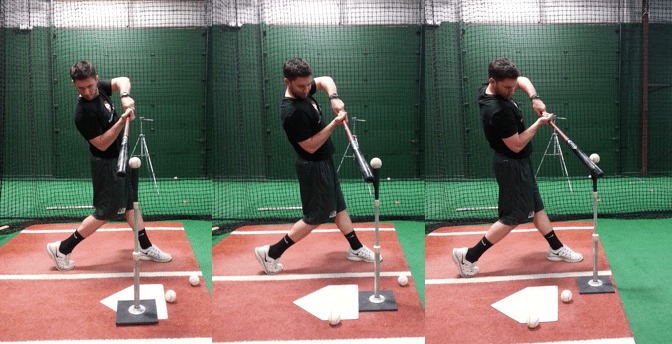
A tee line gets slow when one child needs a long explanation and everyone else waits. The simplest fix for a solo coach is a whole-group hitting turn with a visible waiting task and a clear point where you switch to another skill. For help with batting tees, plate reach, and swing timing, see how to learn to make contact on a batting tee.
One coach hit this problem during an otherwise organized first practice:
Coaching my son’s coach pitch team. First practice went alright. Felt there was room for improvement on my part. Started with intro and had players introduce themselves and also set rules for the season. After that we did a quick group activity and then broke into stations. That’s where I felt it wasn’t as efficient as it could be. 3 stations with 3 kids at each. - hitting/throwing/fielding/catching. Only brought one tee(my mistake). Some kids had never swung a bat before and I was trying to teach that while another hit off the tee. I realized I needed another coach for hitting so I grabbed a parent off the bench. My struggle is how to pivot when it starts going off the rails because they are standing around too much etc. How can I try to teach a kid that needs more help without neglecting the rest of the kids.
With one coach, use this sequence when hitting begins:
- Gather everyone behind the boundary. Put spare bats away. Give waiting players a task they can do where they stand, such as pointing toward first base when you ask or watching where the ball goes. Nothing extra in their hands.
- Call one hitter forward. Check the helmet and tee, demonstrate one cue, and give a short turn. Then send that player back to the group. Nobody approaches the ball until you've ended the swing and made retrieval safe.
- Decide whether another turn works. If instruction is running long and the waiting children are losing focus, close the batting lane and move the whole group to rolled ground balls or coach-led baserunning. Bring the tee back later.
Change the activity when practice runs behind

When the schedule slips, find the problem and drop what's optional. Keep the field rules and an adult on every active activity.
- Ten-minute late start: Shorten introductions and drop the optional closing game. Keep the stop signal and the safe setup.
- Long waits: Move to a group activity after the controlled batting turns. The one-tee steps above tell you when to close the lane.
- Overcrowded or unsafe space: Stop the affected drill. Use fewer moving balls in a controlled area, or stop practice if the space can't be used safely.
If a child struggles to catch a tossed ball, go back to a gentle coach-controlled roll. If an explanation loses the group, demonstrate a single movement and let the players try it. If a child gets upset, give them a short pause or support, and follow your league's procedures.
Adjust the plan for 45 minutes or a longer session
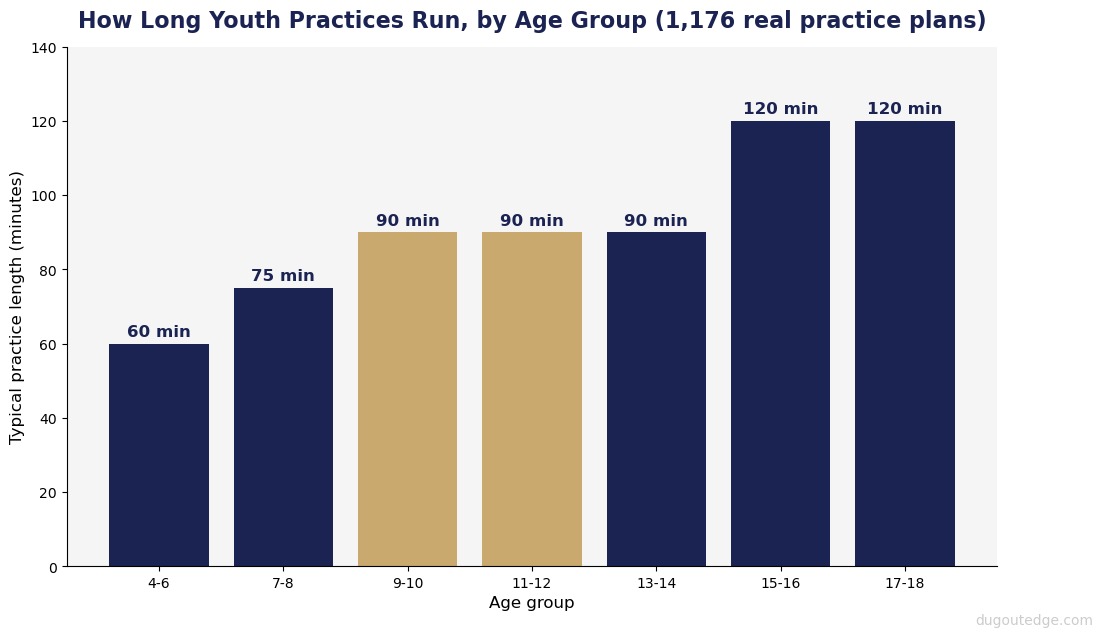
When the session length changes, keep the field check, the activities, and the breaks. Adjust the number of repetitions and the optional finish to the time you have and the group's experience and attention.
| Available time | Keep | Change |
|---|---|---|
| 45 minutes | Brief introduction, movement, throwing and ground balls, tee turns, and a short finish | Reduce repetitions and drop the optional game. |
| 60 minutes | Complete beginner sequence | Use the first table and its staffing arrangement. |
| 75 to 90 minutes | Basic sequence, water breaks, and supervision | Add repetitions or another staffed skill activity if space and player readiness allow. |
In Rolesville, North Carolina, municipal coaching materials give a 60-minute T-ball practice for ages 4 to 6 and a 75-minute plan for ages 7 to 8. Raleigh also publishes 90-minute age-specific practice examples, including Tee Ball and coach pitch.
End with a successful last rep and a 30-second coaching note
Close with something players can achieve: running to a named base or fielding a softly rolled ball. Recognize a visible effort, mention the skill they'll revisit, and follow the league's pickup procedure at dismissal.
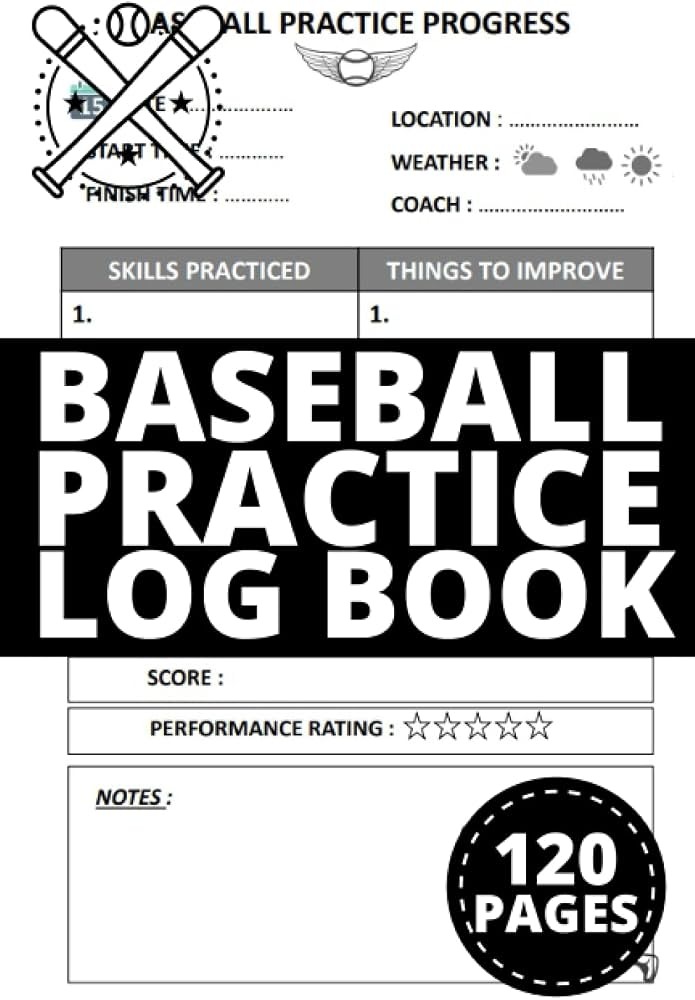
After practice, write three short lines on your field card:
- What worked? Name one cue or activity players understood.
- What stalled? Record where waiting, equipment, or supervision interrupted the session.
- What one change next time? Choose one concrete adjustment for practice two.
The next practice can use the same hour-long structure, with the one adjustment recorded on your field card.