
 Weather: 614-526-6500

A baseball buddy supports a player's turn; the buddy doesn't take it over. The role is to provide the assistance the player accepts and the league allows, while following the coaches' directions and protecting anyone in immediate danger. Volunteer screening, assignments, and postgame handoffs also belong to the job.
What does a baseball buddy do?
During a Miracle League or Challenger game, you may accompany one player through batting, fielding, or baserunning while the coaches manage play. One player wants to field a slow grounder independently; another needs a reminder about the next base. Your support changes with the player and the rules, not with a fixed script.
Before you sign up: age, training and clearance
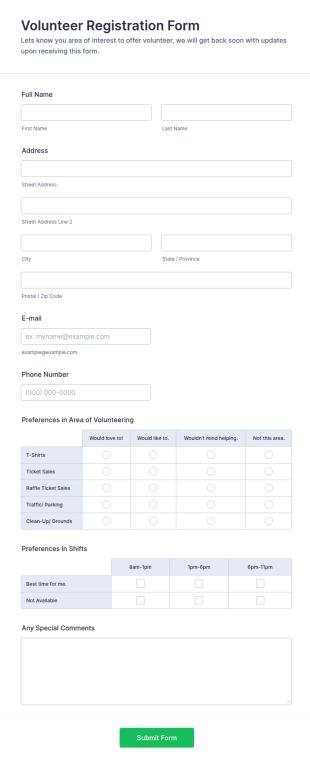
The local program defines who can volunteer and what each assignment entails. Miracle League affiliates and Challenger programs have their own age limits, training, and screening procedures.
Mauldin Miracle League sets the minimum buddy age at 10. Miracle League of Joliet and the Northern Ohio Valley Panhandle each set it at 12.
Miracle League of Montgomery County, Maryland, counts ages 13 to 17 as teen buddies and has a separate adult category for ages 18 and older. Adult volunteers there need a background check every two years.
San Diego starts at 10, with an exception for siblings of players beginning at age 8. These are local policies, so follow the ones for the organization and role you join.
Eight things to ask before you accept a shift
| Check | What to ask the program |
|---|---|
| Organization and role | Is it a player buddy, floater, team helper, or off-field job? |
| Minimum age | What’s the age limit, and does a minor need a guardian’s permission? |
| Registration and screening | Which application, approval or background-check steps apply? |
| Training | Is there an orientation, a training video or a player briefing? |
| Attendance | What are the rules on shift length, arrival, absences and cancellations? |
| Clothing and footwear | Do you need closed-toe shoes, rubber soles or other clothing? |
| Assignment | Who assigns your player and directs volunteers during games? |
| Supervision and handoff | Who handles emergencies and breaks, and who takes the player back at the end? |
Little League strongly recommends a preseason Buddy Training Day for Challenger programs. Its proposed training covers the game format, practical situations, season information and the needs of participating players.
Miracle League of San Diego says a buddy doesn’t need particular baseball or athletic skills. The hosting organization sets the training requirements.
San Diego describes a 1.5-hour game-day shift and separates full-time buddies from floaters who cover absences. If your schedule changes from week to week, consider a floater spot.
Some programs offer other volunteer roles. San Diego lists help with snacks, merchandise and announcing, and Las Vegas has described registration and concessions assignments. The same organization can set different eligibility and training for these roles.
At check-in, meet your player and learn the plan
Before the first pitch, check in with the coordinator, find your assigned coach, and learn where your player starts the game. Register and get assigned before you step on the field. If you’re wondering how players, caregivers and first games fit together, coach, buddy, caregiver: who does what covers it.
Arrival times differ. Miracle League of Montgomery County and Miracle League of Joliet ask you to arrive at least 15 minutes before a game. Northern Ohio Valley Panhandle asks for 30. Go with the time for your assigned shift.
Introduce yourself to the player directly. Bring in a parent, guardian or coach if that helps, and leave the player room to say what they prefer in their own way.
A few questions to start with:
- Moving together: “Would you like me to walk beside you?”
- Playing defense: “Do you want to get the ball yourself?”
- Running bases: “Would a reminder about the next base help?”
- Taking a break: “Who should I tell if you want to step away?”
Players answer with words, gestures or an established communication method. The coach or a support person can explain a preference the player already has, without talking over them.

Little League’s training recommendations include a briefing about your assigned player. Keep what you learn private. It doesn’t give you permission to publish family details or circulate personal records. You need to know which help is useful and allowed, where the player waits between turns, and how to reach the responsible staff member if the plan changes.
A coach might introduce a player who likes making throws alone but appreciates a reminder about the next base. You can then be ready with a cue without taking the ball away. For more on Miracle League, volunteer buddies and accessible fields, see what a Miracle League buddy does.
Helping in the field, at bat and on the bases
Your position and job change as the player moves between defense, batting and base running. Little League’s Challenger game-play guidelines give specific direction on safe field positioning and on assisting players in each phase.
Your role during each phase
| Game phase | What the player does | What you do |
|---|---|---|
| Fielding | Fields, holds or throws a ball | Stay close, keep out of the basepath, and make sure a receiver is ready before a throw. The coach directs any help placing a fielded ball within the player’s reach. |
| At bat, pitched ball | Tries to hit a pitched ball | Help with equipment or an assisted swing when the coach allows it. Batting in the player’s place is a separate matter that local rules govern. |
| At bat, tee | Hits a ball from a tee | Position the tee or other equipment as directed, with fielders ready before the hit. The coach sets which swing help and other adaptations are allowed. |
| Running bases | Moves toward the next base | Go with the runner and give a cue or the physical help the coach allows. The coach directs unexpected routes and the advancement rule. |
| Between turns | Waits, watches or joins the team | Stay attentive within the agreed supervision plan. Staff coordinate changes to participation and breaks. |
Fielding without crowding the player
Watch the batter, your player and the other fielders. Under Little League’s Challenger guidance, fielders keep a safe distance from the batter, and no fielder stands in front of the pitcher’s mound. Keep the basepaths clear and make sure whoever receives a throw is ready.
When a ball is hit softly, let the player field it alone. The guidelines also describe a buddy or another player placing a fielded ball within the athlete’s reach so the athlete can throw or hold it.
Helping at the plate
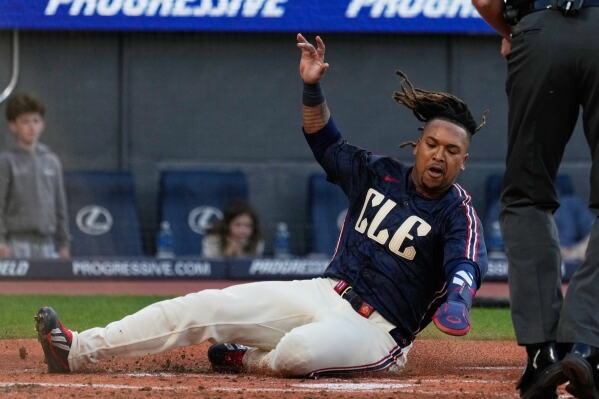
Before a player bats, find out whether the game uses a pitched ball, a tee or another coach-directed setup. The Challenger guidance allows help with the player’s swing. Hitting the ball for the player is different, and the host program’s rules decide it.
A player who wants help lining up at the tee can use a simple cue or an equipment adjustment. Set up the tee once the fielders are ready, and make sure the bat is dropped before the player starts running.
Running the bases
Stay close enough to help, and leave the player room to move. A cue helps when the player hesitates or turns toward another base.
Little League’s Challenger instructions describe runners advancing one base per hit in many situations. A player who takes an unexpected route still needs safe supervision and the coach’s direction about the play. Players and buddies stay on the field at the end of an inning until the final runner scores. For practical guidance on accessible fields, dugout entrances and parking routes, see what “accessible” means at a baseball field.
How much help is enough?
Start by noticing what the player is already doing. Some players want a buddy nearby for safety and handle the play themselves. Others want a verbal cue or a specific kind of physical help.
United Spinal Association’s disability-etiquette tips recommend asking before helping, speaking directly to the person, and treating mobility equipment as part of personal space.
- Observe. Give the player time to start an action when it’s safe. Watch the play around you as well as the player’s movement and communication.
- Ask. Offer a specific choice, such as pointing toward first base or helping position a ball. Use the communication method you set up at check-in.
- Assist. Give the help the player accepts and the coach allows, and only what’s useful in that moment.
- Step back. Hand the action back to the player and keep watching for bats, balls and nearby runners.
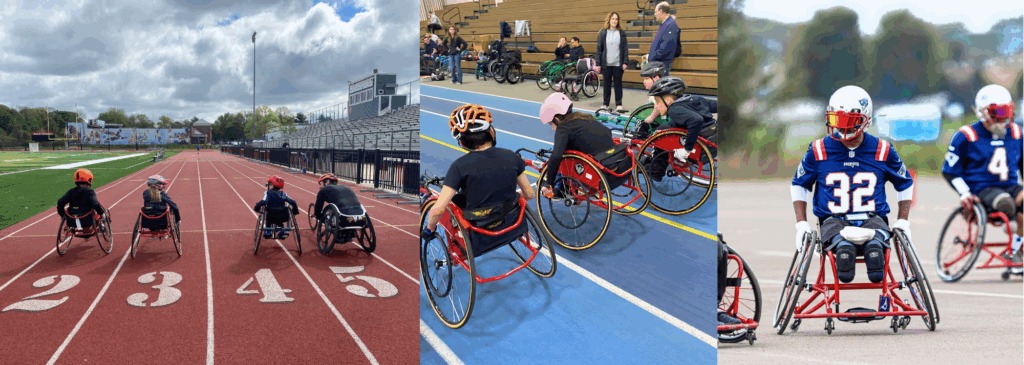
Take a player who uses a wheelchair and prefers to push it toward first base alone. Travel alongside and keep your hands off the push handles. If the player asks for help, follow the plan and the player’s direction. For mixed-ability players, coaches and adjustable drills, read when to help and when to let the player make the play.
When the situation changes quickly
If a hard-hit ball is heading toward someone, protect them right away, within your training and the league’s procedures. Ordinary help leaves time to ask first.
If a preference is unclear or a request falls outside your assignment, bring in the coach before you go ahead.
Safety, boundaries and when to get the coach

Personal care, child protection, incident reporting and emergency response follow the host organization’s procedures.
For chartered Little League programs, the Little League Child Protection Program requires annual background checks and abuse-awareness training for covered volunteers. It also restricts isolated one-on-one contact between an adult and a minor, with published exceptions. Independent Miracle League affiliates have their own safeguarding requirements.
Under that program, suspected child abuse must be reported to the appropriate child protection agency and/or local law enforcement within 24 hours. The policy also directs you to notify the League President and District Administrator. Telling a coach alone doesn’t meet the external-reporting requirement.
If someone is in immediate and serious danger, call 911.
When to call in a supervisor
- The player needs a restroom or wants to leave the field. Contact the designated coach or guardian contact and use the supervised handoff procedure. Never take a minor alone into a secluded space.
- The player is injured or there’s another emergency. Alert responsible staff and use the league’s emergency process. Medical treatment and mobility transfers need authorization and training.
- The player needs personal care beyond your role. Bring in the caregiver or a staff member.
- Someone wants to photograph the player or swap contact details. Follow the program’s consent, media, messaging and privacy rules.

Why rules differ between leagues
Little League Challenger guidance applies to Little League programs. Independent Miracle League affiliates set their own operating rules. Keep that in mind whenever you change locations, seasons or players.
Batting is a good example. The Miracle League of the Northern Ohio Valley Panhandle prohibits buddies from batting in place of players. Another program has documented a different approach for a particular event.
At a Miracle League volunteer event on April 4, 2025, in Gardendale, Alabama, University of Alabama at Birmingham instructions described cases where a buddy could hit for an assigned player when directed. That permission belonged to that local event.

Confirm with the coach for this game’s division: Is batting for a player allowed, and what swing help is permitted? When can a buddy catch or throw for the player, help with wheelchair movement, redirect a runner, or go with a player leaving the field for a break?
Finishing the shift

You’re responsible for your player until the end-of-game handoff. The Northern Ohio Valley Panhandle instructions say to stay with the player until the player returns to the parent or guardian.
If the expected adult hasn’t arrived, stay in the designated supervised area and contact the coordinator or coach.
Reliability between games
Pairing arrangements vary. Some programs keep a buddy with the same player for a season; Northern Ohio Valley Panhandle and San Diego also describe floaters or substitutes who cover absences.
If you’ll miss a game, follow the coordinator’s notice procedure. Northern Ohio Valley Panhandle asks for at least 24 hours’ notice. Las Vegas published 2026 instructions that call for one week for certain group cancellations and at least 48 hours for general cancellations.
Community-service credit follows local conditions too. Northern Ohio Valley Panhandle ties credit to a full-season commitment, and Las Vegas has described service-hour opportunities. If you need documentation, ask how your organization records eligible service.
The postgame handoff includes reporting any incident or concern through the program's process, returning equipment if the program requires it, and updating your future availability.