
 Weather: 614-526-6500

An accessible baseball visit involves more than the playing surface. A player or spectator needs a usable route from unloading to the field or viewing area, with any necessary restroom and facility access along the way. Resolve uncertain gates, routes, or surfaces with the organizer before traveling.
A smooth rubberized diamond is little help if a family cannot find a wheelchair unloading point. By contrast, a field with a crushed-brick infield may still suit another player.
What “accessible” means at a baseball field
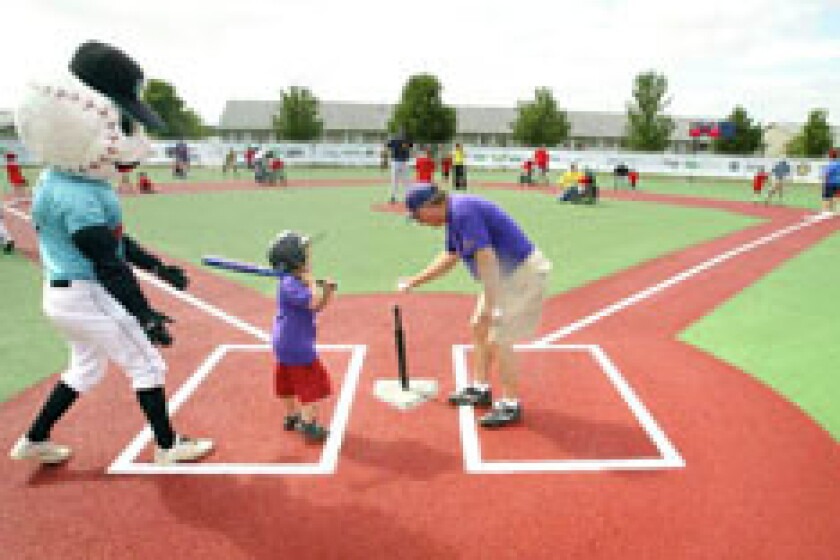
Getting to a baseball field and getting across its playing surface fall under different requirements. The U.S. Access Board’s guidance for ADA §206.2.2 covers accessible routes to the boundary of a sports activity area, including a baseball field. ADA §302.1 separately excepts areas of sport activity from its general floor and ground surface requirements.
A paved route can therefore end at the edge of an infield made of grass or loose material. The exception covers the playing surface. Other ADA rules still apply to the rest of the facility. The U.S. Access Board’s ADA Standards state the surface exception.
Players need the dugout and the spaces used during play. Spectators need a place to watch and access to the facilities used during a game. A parent with a player needs both sets of routes.
From parking or drop-off to the right gate
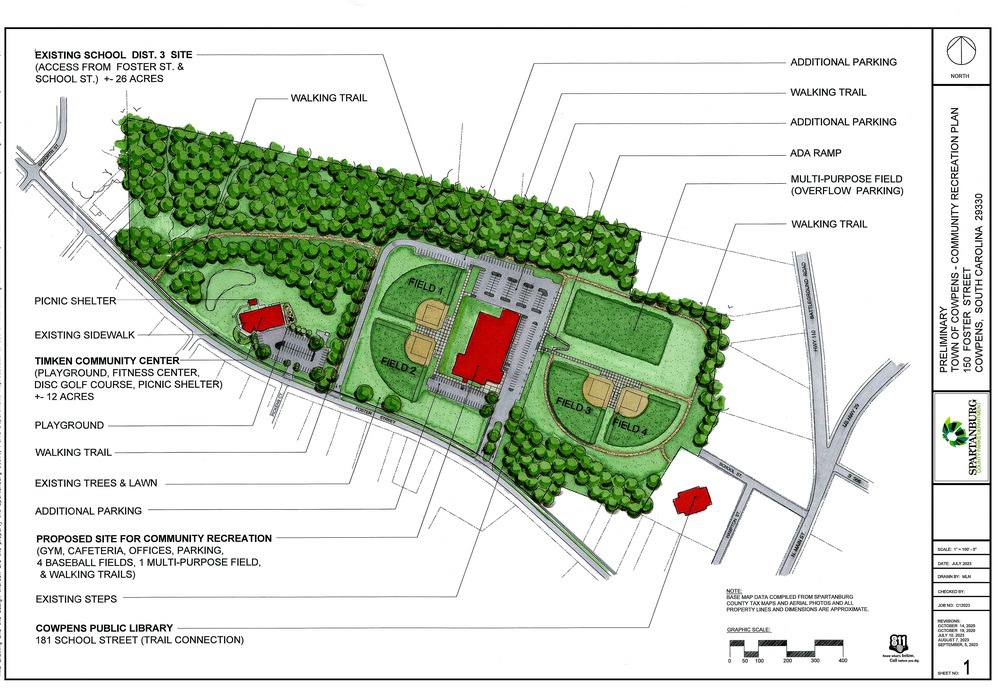
The arrival route starts at the vehicle door. A marked parking space, the aisle beside it, and a passenger drop-off are separate features, and each affects how you enter the grounds. A route that looks direct on a map can include a bridge, a crossing, a slope, or an entrance that serves a different part of the complex.
For accessible walking surfaces, U.S. Access Board route guidance specifies:
- Clear width: at least 36 inches.
- Running slope: no steeper than 1:20. Steeper portions fall under the separate ramp provisions.
- Cross slope: no steeper than 1:48.
An access aisle must also connect to a usable route. The parking symbol tells you nothing about that connection.
Miracle League of Connecticut directs visitors from a University of Connecticut parking lot across a wooden bridge to its field and notes limited accessible parking. The bridge is part of the published route. Miracle League North Bay describes a circular passenger drop-off and van parking.
At Dodger Stadium, one spectator describes the extra space he needs to unload his father’s wheelchair:
If you have general parking they will direct you to a lot out in the center field area for parking. I take my dad all the time in a wheelchair, we park in lot K in a couple of spaces that are big enough for him to get in and out of my truck and for me to get the wheel chair.
Will the playing surface, bases, and mound work?

Look at more than the material under the wheels or feet. Firmness, transitions, seams, and objects along the base paths all affect how someone moves across the diamond.
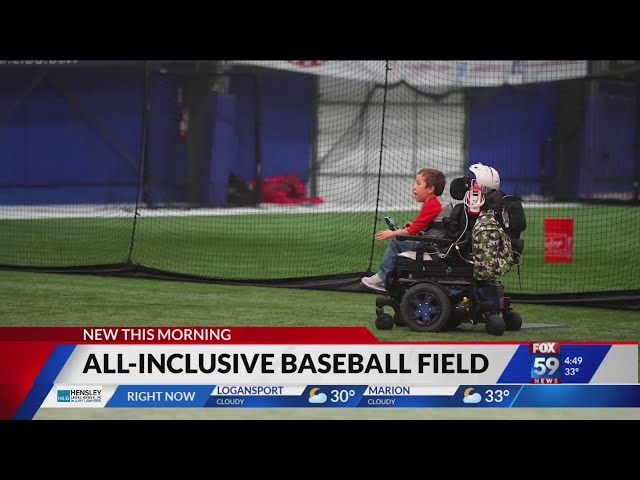
Miracle League of Manasota reports a rubberized playing surface with bases and a pitching mound painted onto it. Miracle League of Connecticut also describes painted baseball features on rubberized surfacing. Painted markings avoid the raised bases and mound found in some other field designs. For details on Miracle League, volunteer buddies, and accessible fields, see why Miracle League fields use different designs.
Butler County Challenger Baseball describes Field #1 as wheelchair accessible, with a crushed-brick infield, stationary bases, and a grass outfield.
Take two players. One moves best on a continuous surface and prefers painted bases with nothing sticking up. The other is comfortable with the transitions and stationary bases at a Challenger field. No surface wins for everyone.
Questions about adaptive baseball, wheelchair softball, and accessible fields are addressed in why the playing surface and field dimensions matter.
Can a player enter and use the dugout?
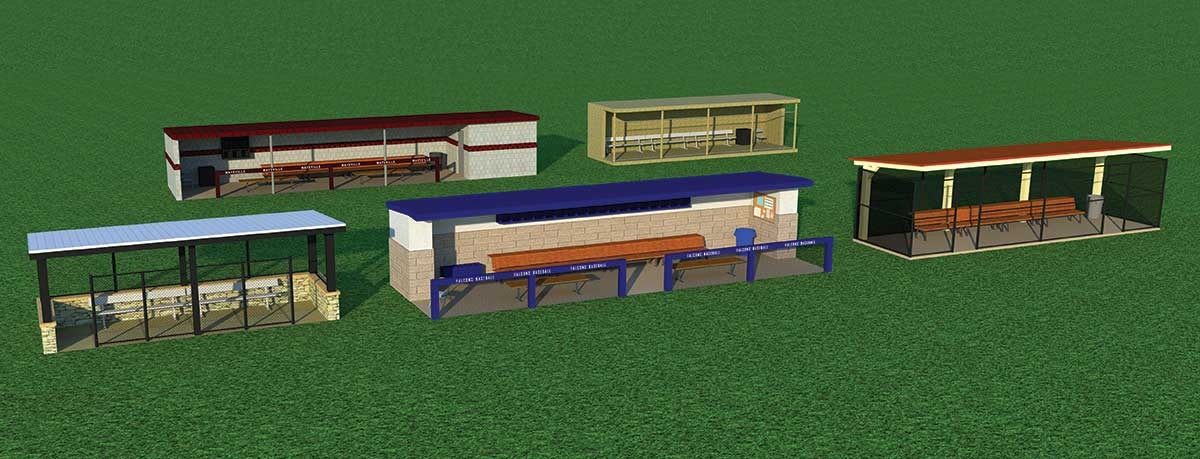
A usable dugout entrance works through the whole movement: approaching the gate, crossing the threshold, turning inside the player area, and getting back onto the field. Benches and equipment take up space that a photo of an empty facility doesn’t show.
The Washington State Recreation and Conservation Office's ball-field accessibility guidance recommends a 48-inch gate opening, which gives approximately 44 inches of clear passage. It also prefers wider approach routes. These are state recommendations, not federal minimums.
Miracle League Los Angeles describes covered, oversized dugouts at its adaptive baseball field. Families whose player needs room to enter and maneuver around teammates will want that.
Restrooms, water, viewing, and family access
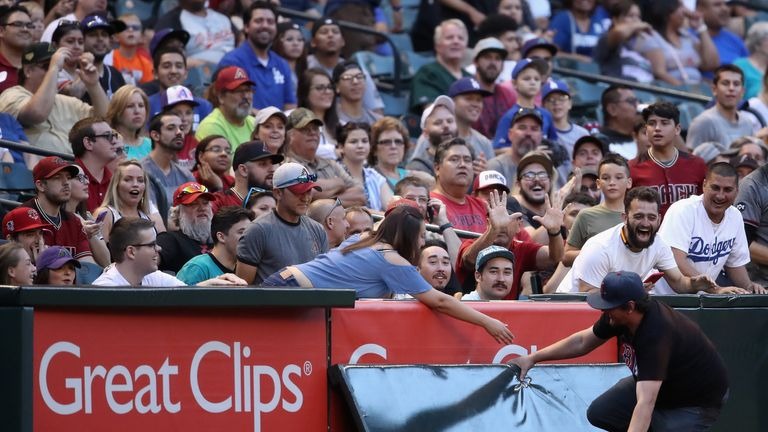
A player can use the field while a companion struggles to reach a place to watch. Restrooms and water have to be reachable from wherever each person spends the game.
Manasota identifies an accessible restroom and spectator seating, Connecticut reports accessible restrooms and concessions, and Los Angeles lists concrete walkways, bleachers, and a drinking fountain.
| Part of the visit | Player's concern | Spectator or companion's concern |
|---|---|---|
| Reaching a place | Connected access to dugout and playing area | Usable viewing space and clear sightline |
| During play | Access to water, restroom, and necessary support | Companion proximity and room to move |
| Breaks and departure | Practicable route out of player areas | Restroom, exit, and return to the vehicle |
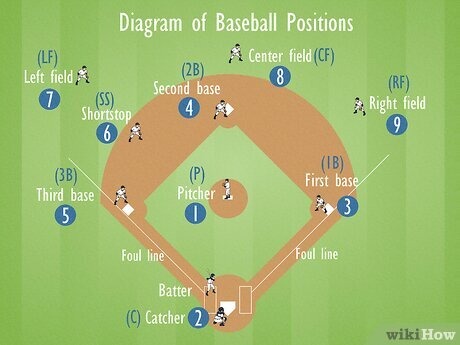
ADA §§221 and 802 cover wheelchair spaces and companion seats in assembly seating. A listing that says “bleachers” or “paved walkway” doesn’t tell you where you’ll sit or whether a companion fits beside you.
Accessibility needs beyond mobility
Grand Strand Miracle Leagues lists sensory kits and communication boards, including English and Spanish options, alongside its physical accessibility features. North Bay describes a public-address system, and the Los Angeles field lists LED lighting. If you rely on communication support or have preferences about announcements and light, you need different arrangements from a visitor who only needs a mobility route. For guidance on Miracle League, Challenger Division, and local registration, see ask whether the league will work for the player.
How adaptive baseball field designs differ
The facilities described by Miracle League and Challenger organizations are not identical. Published site details can help you narrow your questions before visiting.
| Field | Playing area | Arrival and support features described |
|---|---|---|
| Miracle League of Manasota | Rubberized surface; painted bases and mound | Wheelchair-accommodating dugout, accessible restroom, limited accessible parking |
| Miracle League of Connecticut | Rubberized surface; painted bases and mound | Enlarged dugouts, accessible restrooms, bridge on the route from parking |
| Miracle League Los Angeles | Adaptive synthetic turf | Covered oversized dugouts, concrete walkways, bleachers, lighting |
| Miracle League North Bay | Cushioned synthetic turf; painted markings | Flat areas, circular drop-off, van parking, accessible amenities |
| Butler County Challenger Baseball | Crushed-brick infield, stationary bases, grass outfield on Field #1 | Wheelchair-accessible parking and walkways, covered dugouts |
Questions to ask before committing to a visit
A site description tells you the layout and materials. Only the local organizer can confirm the entrances, facilities, field condition, and agreed assistance available for a scheduled game.
Ten questions for the field organizer
- Parking and unloading: Which accessible parking spaces or passenger drop-off points serve this field? Is there room beside the vehicle for the mobility equipment being used?
- Entrance: Which gate should a player or spectator use, and will it be open for the scheduled visit?
- Route: How far is it from unloading to the playing area or viewing position? Does the route include a bridge, slope, crossing, threshold, or alternative entrance?
- Surface condition: What covers the infield? Are there seams, loose patches, wet areas, or other changes that affect the player's equipment?
- Bases and mound: Are the bases, mound, and home plate painted or flush, or are there stationary or raised features? What happens at the field edge?
- Dugout: What are the gate clearance, threshold, and available turning space? Can you send a current photo or measurement?
- Restroom: Which accessible restroom serves the game, and will it be open throughout the visit?
- Viewing: Where can a wheelchair user watch, and can a companion stay alongside with a clear sightline?
- Other support: What communication, sensory, sound, lighting, or buddy arrangements are offered, and who can discuss the player's preferences?
- Game-day changes: Who can confirm weather closures, maintenance, gate changes, or an alternate route? Can you arrange a short advance visit if a key feature is still uncertain?
| What is known | Decision |
|---|---|
| Key routes and facilities are confirmed usable for this person | Visit |
| An obstacle has an agreed workable alternative | Visit with an adjustment |
| A key feature is unknown or unsuitable | Confirm first or consider another field |