
 Weather: 614-526-6500

A station plan is limited by the number of approved adults and safe, separated field areas—not the number of drills a coach would like to run. With 12 players, three adults, and three usable zones, three groups of four can rotate through three eight-minute stations in a 60-minute practice. Fewer helpers or zones mean fewer stations or one shared circuit.
The chart needs to answer three questions at once: where each player goes, what each adult supervises, and how the session fits the field booking. The example assumes a recreational team, ordinary equipment, and one hour, followed by a blank version for your own group.
Start with confirmed players, adults, time, and field space
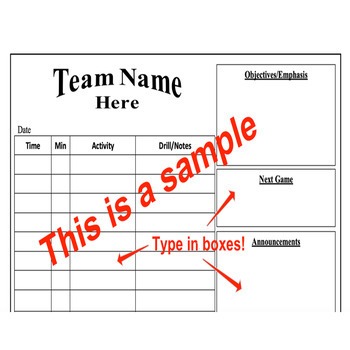
Plan for the people who arrive, not just the roster. Twelve expected players may become nine at the field; three helpers may become two. Count approved adults and usable zones, then fit the equipment and booked time around the real attendance.
Practice inputs: Players present: ______ | Approved adults present: ______ | Total minutes: ______ | Usable zones: ______
Equipment: Tee: ______ | Protected net or cage: ______ | Balls: ______ | Gloves: ______ | Helmets: ______ | Cones: ______
Today's objective: ______ | Participation or transition needs: ______
Choose one or two priorities—cleaner ground-ball fielding or steadier tee contact, for instance. Warm-up, explanation, changeovers, water, and a final review must also fit into the allotted time.
How many supervised stations can you run?

Every station needs an approved adult who knows the drill and an area of its own, away from the other activities. Your adults, your field layout and your league's rules decide how many stations you can run. For the safety side, see how to keep batting, throwing and running stations safe.
- Three adults, three separate zones: Run three stations, one adult at each.
- Two adults, two separate zones: Run two stations if each adult can manage the group and the activity safely.
- One adult: Keep the whole team together and run one activity at a time, if your league allows that staffing.
- Unsafe space or too few adults: Cut back the number of activities, or postpone the one you can't manage safely.
Give helpers narrow jobs. One might roll grounders within a marked lane. Another might run a tee station with a protected net. Each helper needs to know where players wait, where the activity boundaries are and when to pause.
One r/LittleLeague volunteer described asking parents directly and handing them easy stations to run:
Call some of the parents this weekend and convince them to run a station. There's always parents willing to help, but they won't step up until you ask. I try to get three stations going at least, so you'll need two assistants and give them the easiest jobs first. Have one doing glove work in right field, another doing no glove catch with tennis balls or wiffles in left field. You can do some infield work or a specific drill you want to work on. Rotate after 5-10 minutes then break for water and come back for a scrimmage. Change up the stations week to week, keep it fun. My wife likes to run her own station doing one on one tee work into a net. She gets through the whole team in the practice period. Now every kid gets 10-20 reps with a coach, and she enjoys getting to know each kid individually.
John Cissik describes a 13U practice built on three stations with six-minute rounds and planned transitions, in a March/April 2022 American Baseball Coaches Association coaching article.
Give each station one clear job
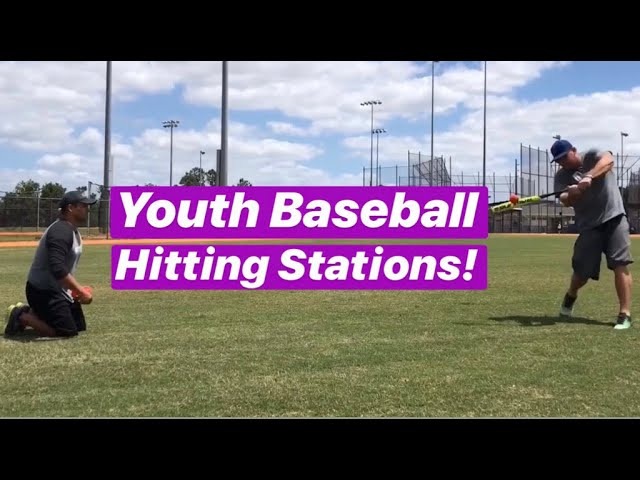
Pick activities with different coaching purposes. The example uses contact, fielding and baserunning, and each adult stays with one activity for the whole rotation.
| Station | Activity | One coaching objective | Adult supervision |
|---|---|---|---|
| H: Hitting | One-at-a-time tee contact into a protected net | Balanced setup and controlled contact | Watch the bat area and the waiting players |
| F: Fielding | Short grounders and controlled return throws | Receive the ball, then throw it back to the intended target | Keep delivery and return throws inside the lane |
| R: Running | Marked baserunning or a simple base-turning route | Follow the route and respond to a cue | Keep runners on the marked path |
Give each stop one short, specific cue. The fielding coach might focus on getting the glove in front of the ball. The hitting coach might stress a balanced setup. Adjust the difficulty to the group without piling on instructions. The rule behind this whole plan: build only as many practice stations as you can supervise.
These three jobs suit a balanced-skills session. A hitting-focused practice could use several types of batting work instead.
Put the stations where balls and players won't cross
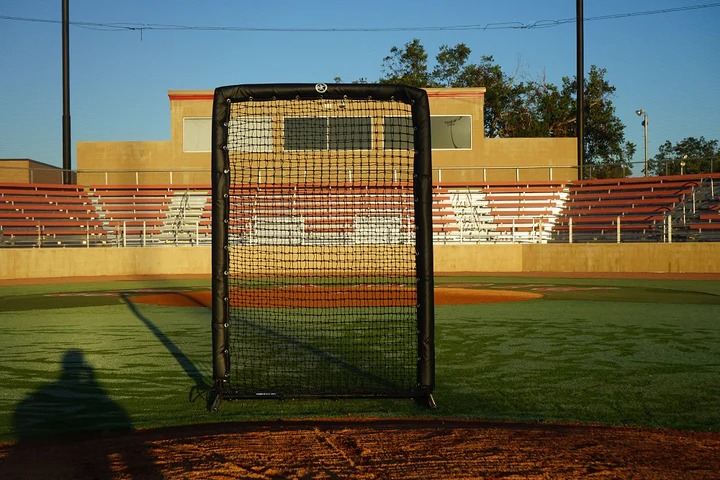
The real field determines station placement. Mark ball paths, hitting areas, equipment storage, and walking routes before assigning groups. If adult coverage is the constraint, see how to size baseball practice stations for available coaches.
- Hitting area: Use a protected area, supervise the hitters and keep waiting players outside bat swings and stray ball paths.
- Fielding lane: Keep rolled grounders, return throws and ball collection inside the lane.
- Running route: Mark a path that doesn't cross batting or throwing.
- Transitions: Stop all swinging and throwing while groups change stations, and have an adult watch each route.
If the baserunning path crosses the fielding lane's return throws, those zones cannot operate in that arrangement. Change the layout or the schedule.
The Little League Safety Code covers field hazards, weather and lighting, emergency readiness, equipment use, throwing separation and protective equipment, including certified batting helmets and required catcher protection. Approved adult managers or coaches may operate pitching machines under its conditions.
Layouts are conceptual: Sketches are not to scale and are not a safety certification. Place nets, cages and backstops correctly, and stop the session if weather, visibility or the playing surface is unsafe.
A complete 60-minute, 12-player rotation
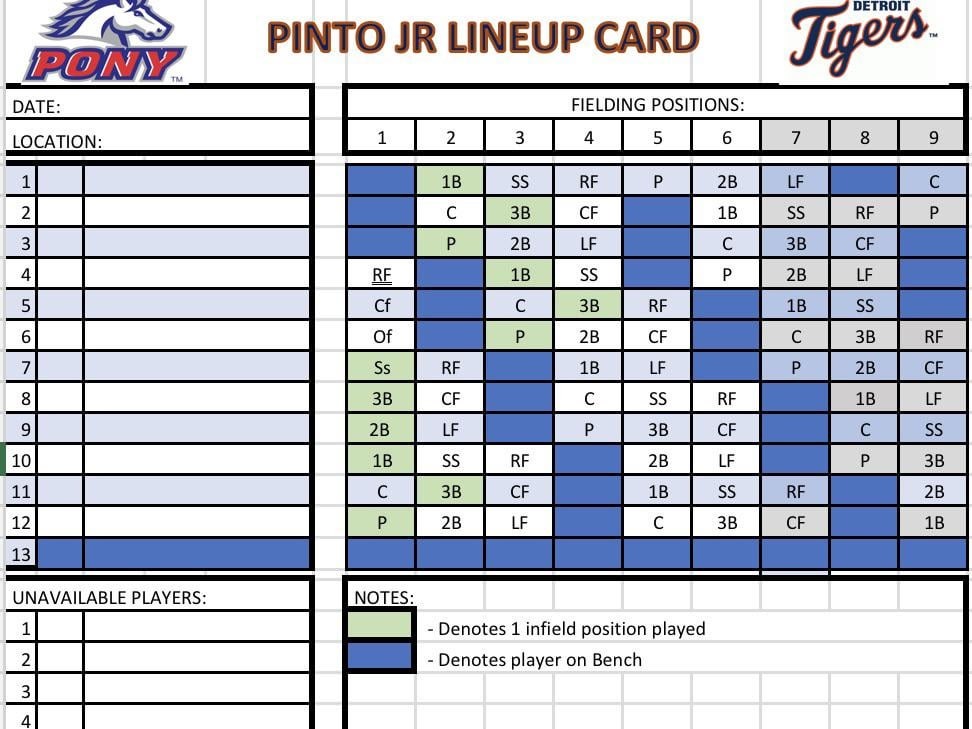
With 12 players, three approved adults and three usable zones, form three groups of four. Adult 1 runs Hitting (H), Adult 2 runs Fielding (F) and Adult 3 runs Running (R). The adults stay at their stations while the groups move.
One-hour practice timetable
| Elapsed time | Minutes | Activity |
|---|---|---|
| 00:00 to 00:10 | 10 | Warm-up and supervised throwing |
| 00:10 to 00:14 | 4 | Brief instructions and movement routes |
| 00:14 to 00:22 | 8 | Station round 1 |
| 00:22 to 00:24 | 2 | Pause activities; change stations |
| 00:24 to 00:32 | 8 | Station round 2 |
| 00:32 to 00:34 | 2 | Pause activities; change stations |
| 00:34 to 00:42 | 8 | Station round 3 |
| 00:42 to 00:46 | 4 | Water and supervised reset |
| 00:46 to 00:56 | 10 | Controlled team game situation |
| 00:56 to 01:00 | 4 | Review and dismissal |
| Total | 60 | Full practice session |
The budget: 10 + 4 + (3 × 8) + (2 × 2) + 4 + 10 + 4 = 60 minutes. Station work takes 24 minutes, plus four more for the two transitions.
Give each group a route
| Round | Group A (4) | Group B (4) | Group C (4) |
|---|---|---|---|
| 1 | Hitting H | Fielding F | Running R |
| 2 | Fielding F | Running R | Hitting H |
| 3 | Running R | Hitting H | Fielding F |
Each group visits H, F and R once. Four players share each station here. Adjust group size and round length to your players, your equipment and the travel time between zones.
Printable blank rotation worksheet
Fill in the names and station owners first, then give every group a station in each round. Leave time in the same booking for movement and non-station activities.
Group A player names: __________________________________
Group B player names: __________________________________
Group C player names: __________________________________
Station H adult / zone: ____________________ Station F adult / zone: ____________________ Station R adult / zone: ____________________
Total booked minutes: ______ Warm-up / briefing: ______ Round minutes: ______ Transition minutes: ______ Water / game / review: ______ Time total: ______
| Round | Group A station | Group B station | Group C station |
|---|---|---|---|
| 1 | ____________ | ____________ | ____________ |
| 2 | ____________ | ____________ | ____________ |
| 3 | ____________ | ____________ | ____________ |
For three rounds, the total is warm-up and briefing minutes + (3 × round minutes) + (2 × transition minutes) + water, game and review minutes. Each round needs three different station assignments. If your field needs changes longer than the example's two minutes, rebalance the total before you start.
The two-coach and one-coach backup plans
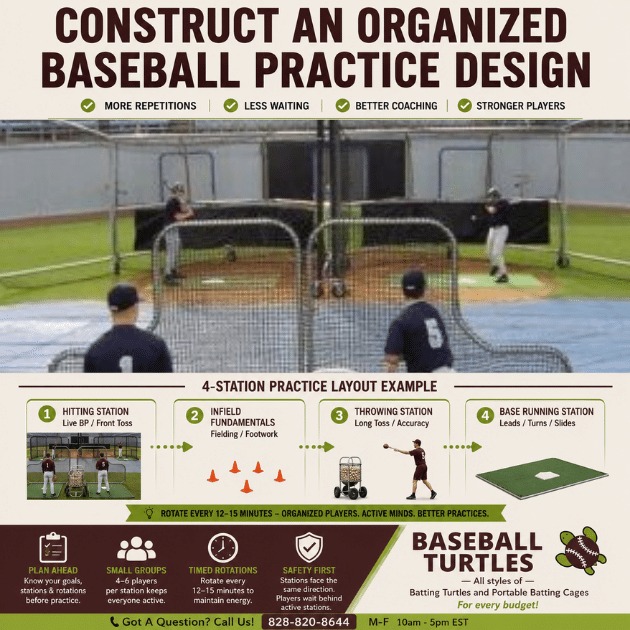
When an assistant cancels or a work area becomes unusable, cut the number of stations running at once and recount the session. Both alternatives below fit the same one-hour booking.
One r/LittleLeague coach described keeping solo practices simple and ending with a managed game situation:
If it’s just you, come up with 3-4 simple drills and spend 10min on each one. Grounders, pop flies, practice fielding a ball and then throw from 2nd or SS to 1st, get 2 lines behind 2nd and SS and practice the short toss to 2nd. Batting practice is tough if it’s just you, but you could end with a game-like scenario, don’t play an outfield and have 3 runners and a batter. Have your infield rotate, 3rd base rotates to become a batter, and whoever just scored becomes 1st base; everyone else rotates around.
Two approved adults: two stations
With 12 players, two groups of six can swap between hitting and fielding, as long as the adults can supervise them and the zones are safely separated. Watch waiting time and individual needs to see whether six per group works.
- 00:00 to 00:14 (14 minutes): Warm-up and instructions.
- 00:14 to 00:26 (12 minutes): Group A at H; Group B at F.
- 00:26 to 00:28 (2 minutes): Stop ball activity and exchange groups.
- 00:28 to 00:40 (12 minutes): Group A at F; Group B at H.
- 00:40 to 00:44 (4 minutes): Water and reset.
- 00:44 to 00:54 (10 minutes): One controlled team situation.
- 00:54 to 01:00 (6 minutes): Review and dismissal.
Two station rounds take 24 minutes, with one two-minute changeover. Total: 60 minutes.
One approved adult: team circuit
With one approved adult, the team stays together for one activity at a time. This needs league permission for that staffing level and an adult who can actually supervise the whole group.
- 00:00 to 00:14 (14 minutes): Warm-up and instructions.
- 00:14 to 00:26 (12 minutes): Supervised ground-ball receiving.
- 00:26 to 00:28 (2 minutes): Reset.
- 00:28 to 00:40 (12 minutes): Controlled throwing and movement.
- 00:40 to 00:42 (2 minutes): Reset.
- 00:42 to 00:52 (10 minutes): Supervised game-like situation.
- 00:52 to 00:56 (4 minutes): Water.
- 00:56 to 01:00 (4 minutes): Review.
The blocks total 60 minutes.
Keep the rotation usable for different experience and access needs

A station can keep one objective and offer different levels of difficulty. One player might get slowly rolled grounders while another gets a more demanding controlled return throw. If a player needs a clearer cue, help with movement or more time between stations, build that adjustment into the group plan. Little League Challenger guidance emphasizes individual goals, buddy preparation and the player's growing independence, so help should follow the person's preferences and the program's expectations. Name the helper's role and position before the station starts.
When to stop rotating and play the situation
Stations let players repeat a specific skill; a controlled team situation brings runners, defenders, and backup players into the same decision. If fielders spend live batting practice waiting for a ball, a coached scenario gives them an active job in the play.
One volunteer coach would spend two-thirds of practice on situational baseball:
I know I'm in the minority but I would spend 2/3 of every practice on situational baseball, defense, and baserunning. I hated pitching to kids, where most of the team is standing around watching and waiting for someone to make contact. Kids seemed to love the on base situations, defense, run downs, and turning outs, sometimes double plays. It gets most of the team involved as either baserunners or trying to turn outs. We did do some hitting, but I'd put some of that onus on parents as homework. I always had an excellent defensive team and the hitting was decent. Defense, baserunning, and stealing was my thing. We got hits, but little league has a lot walks. Use that. Be aggressive on the bases.
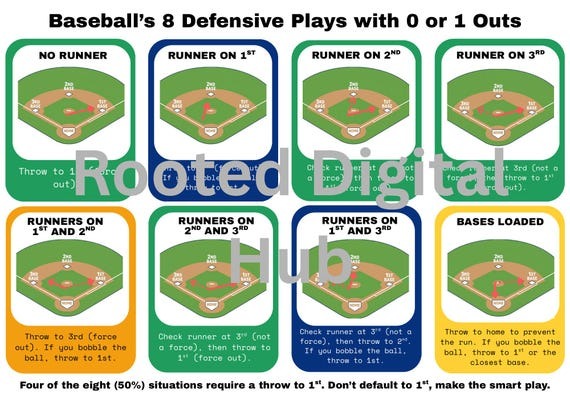
In the 60-minute example, the final ten-minute game segment lets the group work on coordinated defense and baserunning after the focused rounds. If a session centers on decisions such as covering bases or choosing a throw, give the team situation a larger share. Throwing partners can practice with a simple five-exchange routine.
Review how the rotation worked
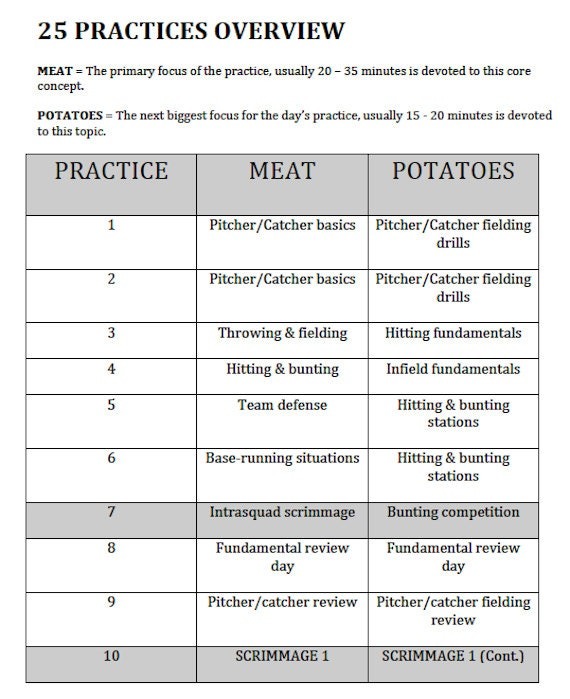
The few minutes after dismissal are useful for recording what worked and which part of the next rotation needs adjustment.
- Time drift: Compare actual round and transition times with the schedule.
- Participation: Note missed station visits, long queues and players who missed meaningful turns.
- Safety and space: Note ball-path conflicts, unusable zones, equipment problems or missing helpers.
- Next change: Pick one adjustment to timing, grouping, activity or layout.
If a changeover took four minutes instead of the two planned, account for those minutes next time. A shorter walking route or fewer changes may be more effective than telling players to hurry.