
 Weather: 614-526-6500

In beep baseball, blind and low-vision athletes listen for a beeping ball and buzzing bases. Under the NBBA's 2026 rules, a sighted teammate pitches. After a fair hit, the blindfolded batter runs toward an activated base while defenders try to secure the ball. Arriving first scores a run; a defender securing the ball first records an out. Catches, home runs, strikes, and interrupted plays have additional rules.
How does one play of beep baseball work?
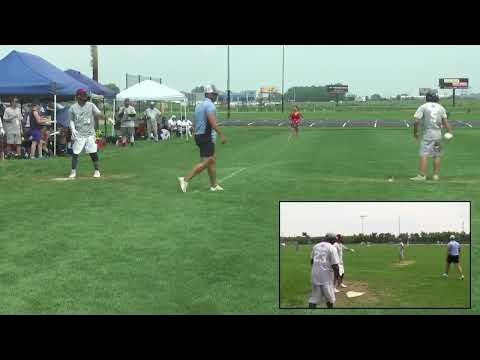
A fair hit starts two races. The batter heads for the buzzing base; six defenders listen for the ball and try to secure it before the runner arrives.
There is no runner waiting at second, no trip around four bases, and no throw to first for a routine putout.
The sequence has five parts:
- The pitcher throws. A sighted pitcher throws to a blindfolded batter on the same team and uses verbal signals to coordinate the pitch. A catcher assists behind home plate.
- The batter makes contact. The umpire decides whether the hit is fair, using the 40-foot boundary rule. A foul ball does not start a scoring race.
- One base starts buzzing. An operator activates either first or third base. The runner follows that sound to the base.
- The defense chases the ball. Fielders listen for its electronic beep and move to secure it. A sighted spotter can give limited help.
- The umpire calls the result. A runner who touches the activated base before the defender secures the ball earns one run. If the defense secures the ball first, the batter is out.
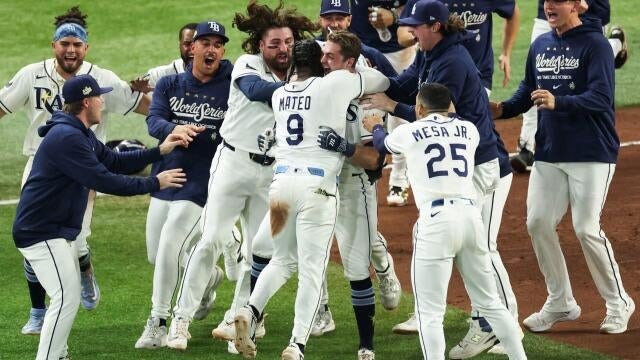
Picture a batter driving the ball into fair territory beyond the boundary. The third-base buzzer comes on. The runner turns toward that sound while a defender moves toward the beeping ball.
The defender gets a hand on the ball, loses it, and scrambles to grab it again. The runner keeps closing on the buzzer. If the runner touches the base before the defender has the ball under control, the team scores. If not, the batter is out.
Who pitches, catches, bats, and fields?
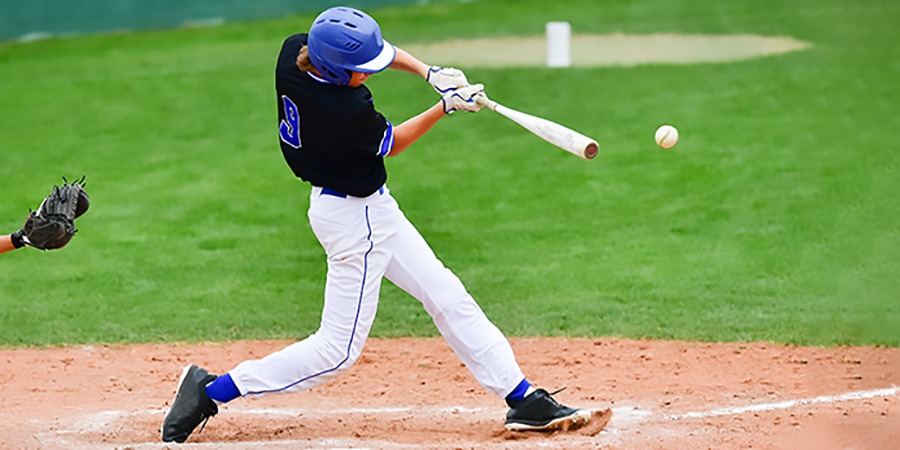
Beep baseball puts the pitcher and batter on the same side. The pitcher's job is to give a teammate a hittable ball, which makes consistent timing a skill shared by both players.
Each team fields six defensive players. Pitchers, catchers, and sighted spotters fill separate support roles.
| Role | Side or function | What the person does |
|---|---|---|
| Batter / runner | Offense | Hits the audible ball and runs to the activated base |
| Pitcher | Offense | Throws coordinated pitches to a teammate |
| Catcher | Offense | Works behind home plate with the pitcher and batter |
| Six fielders | Defense | Locate and secure the beeping ball |
| One or two spotters | Defense | Give limited defensive signals |
| Umpire | Officiating | Rules on fair hits, plays, runs, outs, and interruptions |
A pitch starts with a preparatory call such as "set" or "ready," followed by "pitch" or "ball" near release. The batter learns when to swing. The pitcher learns where and when to deliver a pitch that matches that batter's movement.
A player who once filled in as pitcher wrote:
The pitcher is on the same team as the batter. So I got to pitch a game once to fill in for the regular who couldn’t make it and we did a lot worse than usual. At practices it’s all about learning the timing. So the pitcher will yell a count like “Ready, pitch” and try keeping the same rhythm and hit the same target each time. They are then able to coach the batter some but a lot of the hitting is on the batter swinging the same each time and the pitcher adjusting to each batters unique swing. Whether they swing high, low, too fast or too slow they’ll let the pitcher hear it. The team and players I got to be involved with were very good sports and often had sort of a dark humor about their lack of vision. They loved to tease me if my pitching was off
Where are the buzzing bases and the 40-foot line?
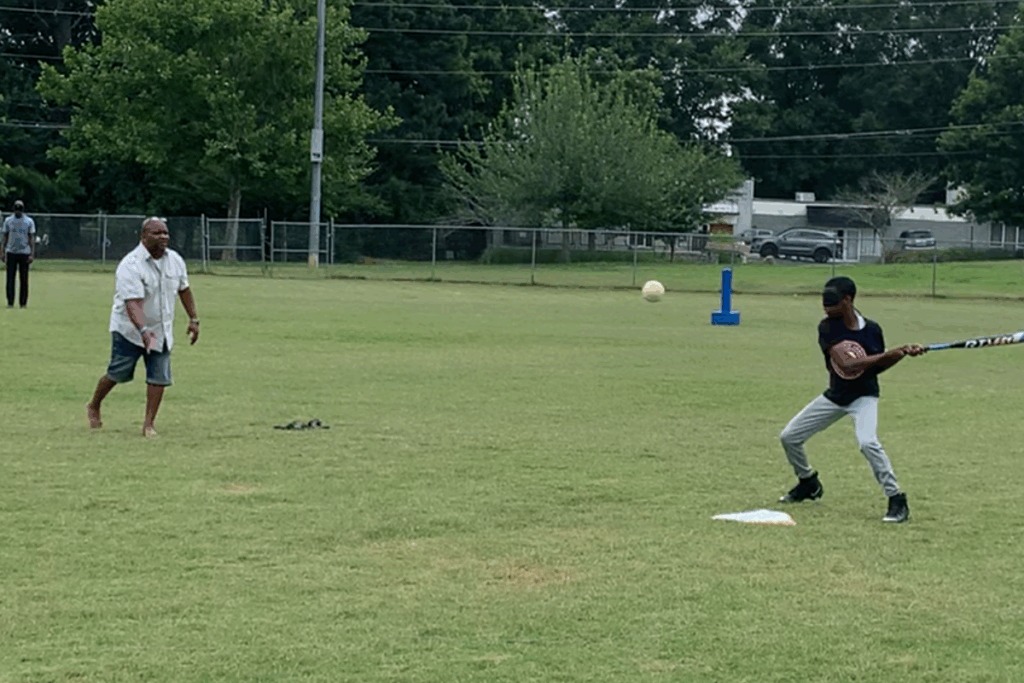
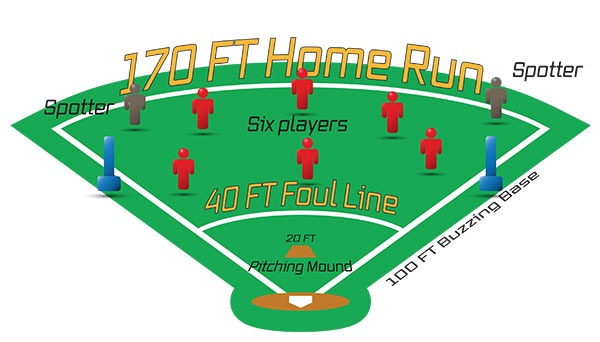
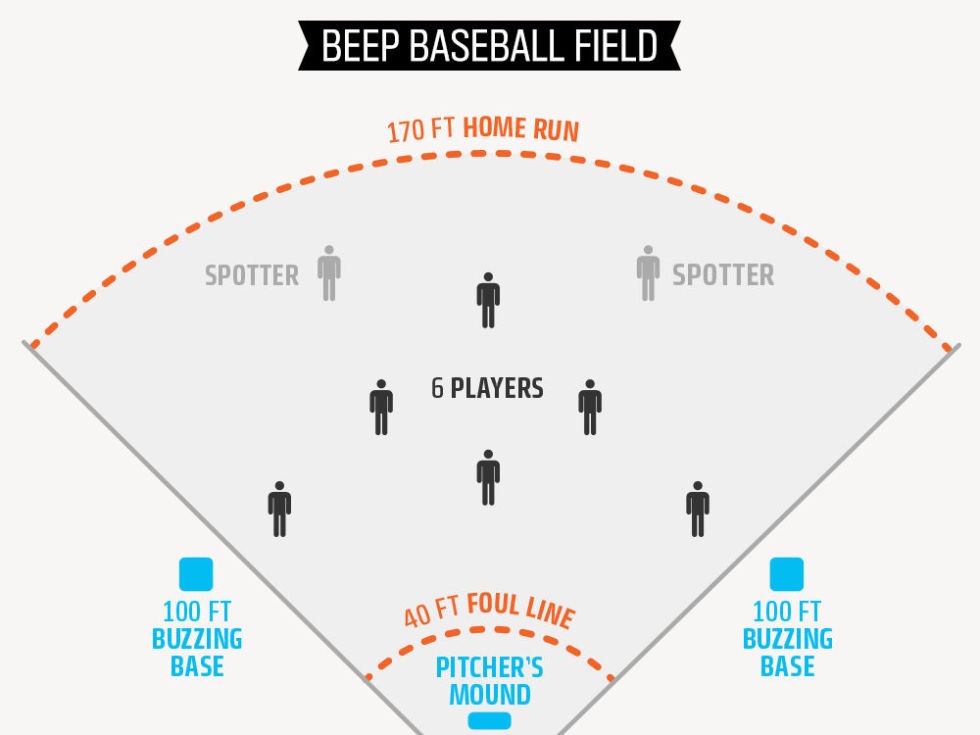
A beep baseball field has home plate and two audible destination bases, located toward the first-base and third-base sides. There is no second base. Home plate does not buzz.
The field specifications give these reference measurements:
| Field element | Measurement or location | Purpose |
|---|---|---|
| Pitcher's mark | 21 feet 5 inches from the rear point of home plate | Where the offensive pitcher stands |
| Auxiliary pitching mark | 10 feet from the front edge of home plate, along the pitching reference | Used by officials to judge illegal pitching |
| Fair-hit boundary | 40-foot boundary defined by the rulebook's field geometry | Decides whether contact counts as a fair hit |
| First and third reference marks | 100 feet along their respective foul lines | Mark where the base locations are measured from |
| Audible base placement | 10 feet outward from the respective foul-line reference marks | Where the buzzing bases sit |
| Audible base height | 48 to 54 inches | How tall the bases are |
The two pitching marks measure from different edges of home plate, so read each one from its stated starting point.
How do you score a run or make an out?
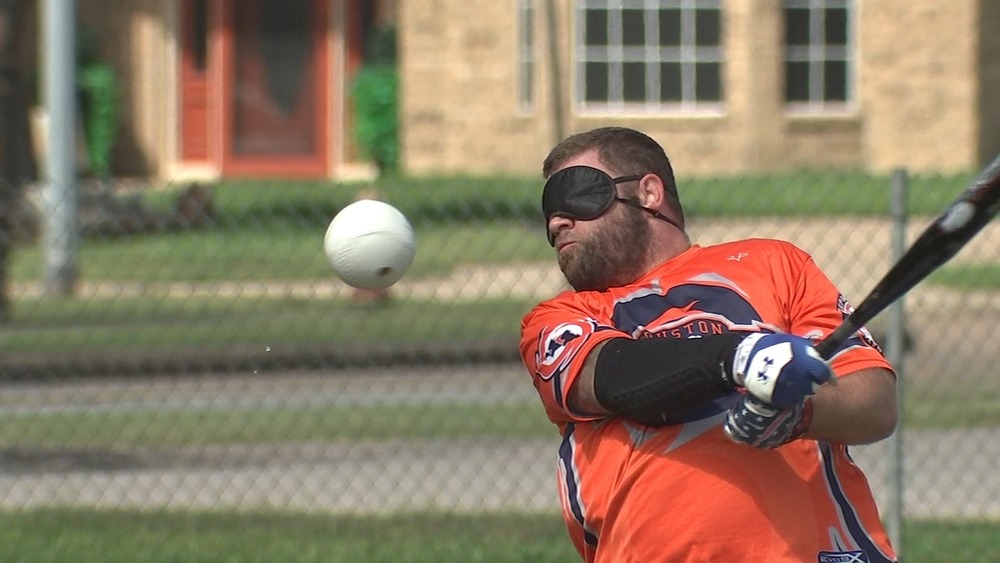
On a fair hit, the umpire compares two actions: the runner touching the activated base and a defender securing the beeping ball. Whichever happens first decides the outcome, and a tie is an out.
A defender secures the ball by holding it in a hand or glove, clear of the ground and body. Stopping it with a foot, leg, or torso does not complete a putout by itself.
| Play outcome | Result |
|---|---|
| Runner touches the activated base before the defender secures the ball | One run |
| Defender secures the ball before the runner touches the base | One out |
| Runner and fielder complete their actions simultaneously | Runner is out |
| Qualifying fair airborne home run of at least 170 feet, with base touch within 30 seconds | Two runs |
| Live batted fly caught before touching the ground or another obstacle | Defensive side retired |
| Fieldable fair ball caught after one hop | Two outs, or the half-inning ends if two outs already exist |
A home run must travel the 170 feet in the air in fair territory. If the runner misses the 30-second window for touching the base, the batter is out, except under the rulebook's equipment-malfunction exception.
A defender who blocks a grounder with a leg and briefly traps it against the body has slowed the ball but not secured it. If the runner touches the base before the defender has it in a hand or glove, the umpire awards a run.
What are the basic rules for innings, strikes, and fair balls?
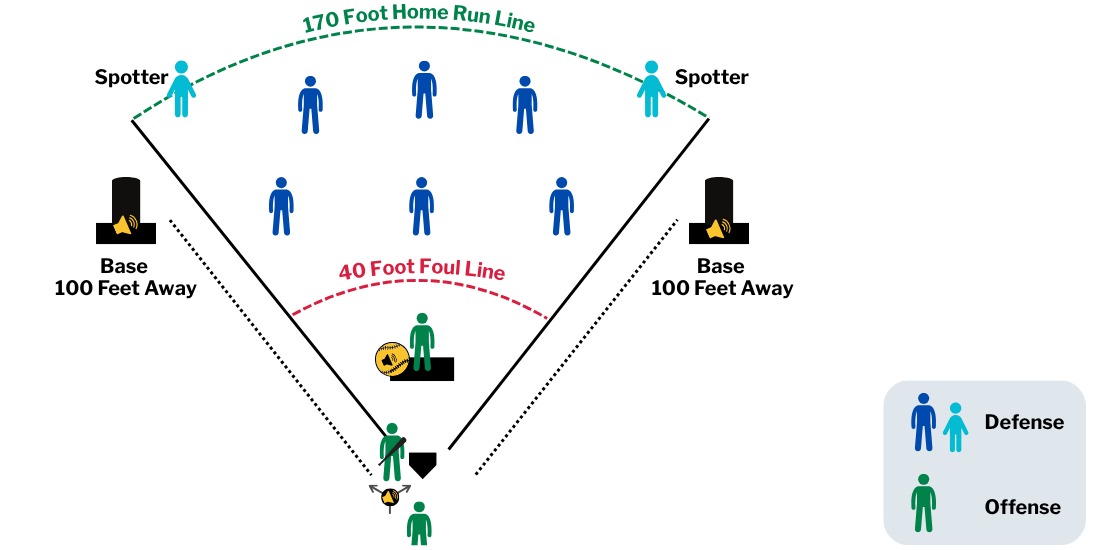
A regulation NBBA game has six innings. Each team bats in a half-inning that ends after three outs. Extra innings and early-ending provisions can change the game's length.
A batter strikes out after four charged strikes. Charged strikes are counted separately from swings and pitches.
A legal pitch the batter does not swing at counts as the batter's one free pass and carries no strike. Later passes are charged as strikes. Foul balls and foul tips can also add strikes while the batter has fewer than three.
A foul with three strikes does not end the at-bat. The fourth strike must be a clean miss or a called strike under the rulebook's conditions.

A batted ball that stops short of the 40-foot fair-hit boundary without qualifying contact is foul. The rules also cover contact with a defensive fielder other than the pitcher, or with a spotter. Spotter contact can bring a separate interference award.
Illegal pitching, audible-equipment problems, interference, and outside disturbances can lead officials to suspend or alter a play.
The NBBA 2026 competition rules are dated November 13, 2025. For a disputed pass, foul, equipment failure, or interference ruling, check that edition.
How do blindfolds and defensive spotters work?
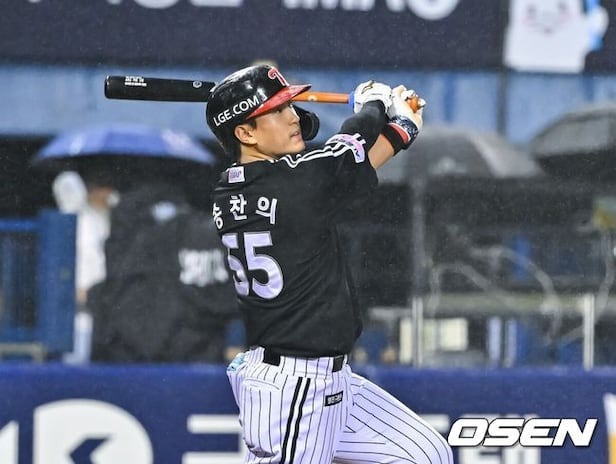
NBBA batters and defensive fielders wear regulation blindfolds, including athletes with some usable vision. A player who documents a medical inability to wear an approved model may use an inspected alternative.
Each defense may use one or two sighted spotters. A spotter makes a single-number call from 1 to 6 to identify the fielder best positioned to reach the batted ball. The fielders then locate and secure it themselves, and they may communicate under the rules.
Other directional help from spotters is restricted. The rulebook does permit specified hazard warnings, including those about dangerous fly balls and imminent collisions.
Why do sound and field conditions matter?
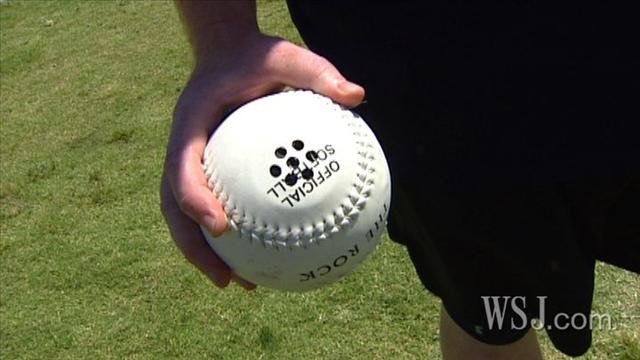
Players have to tell a moving electronic beep apart from a fixed buzzing base. The beep tells fielders where the ball is. The buzz tells the runner where to go. Both depend on what else can be heard around the field. If you're weighing beep baseball against Miracle League and Challenger Division play, see which format fits different playing goals.
Outside disturbances affect play. Music, passing vehicles, crowd noise, and other interference can obscure the sounds athletes use, and officials can suspend play.
A runner sprints toward a buzzer with no visual reference points. Fielders move toward the ball while teammates cross the same area.
One player who plays a lot wrote:
I play a lot and it is terrifying running to a base or trying to field a ball. Injuries aren’t uncommon from people running full sprint and falling and hurting their wrists or knees. But if you get a chance to even just bat it is really well worth the experience
An obstacle near an audible base can become a collision hazard when someone is moving toward it at speed.
Another commenter described an indoor demo that went wrong:
We had a little accident since the demonstration was inside where the hitter was running for that Pylon in the video which serves as the base. We had moved a bunch of benches out of the way that were really close to the baseline but evidently not far enough. Most of the hitters would casually jog to the pylon because it was just a demo, but one dude went ALL OUT. Probably because we were inside and it was loud and "reverbery" in there (also the baseline was basically turf/carpet which felt the same as the "grass") the guy was hauling ass and missed the pylon by kind of a lot and ran right into these benches and totally flipped flying through the air. It was insane and hard not to laugh, was so unexpected based on the previous pace of play. Luckily the guy was uninjured besides probably some bruised shins.
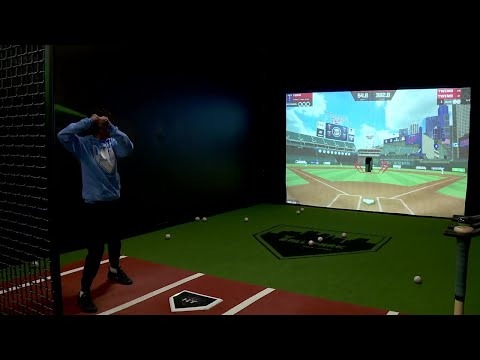
At a game or demonstration, spectators should stay outside the playing area, keep running routes clear, and avoid adding sound during live play. Officials decide whether a disturbance needs a stoppage. For accessible fields, dugout entrances, and parking routes, see accessibility needs beyond mobility.
Who can play beep baseball, and how can you try it?
NBBA competition centers on players who are blind or have a qualifying visual impairment, alongside sighted personnel who pitch, catch, and spot.
The association's competitive definition of visual impairment is distance visual acuity of 20/70 or worse and/or a visual field of 30 degrees or less in the best eye with best practical correction. Tournament participation follows the association's eligibility and documentation rules.
The rules allow one narrow exception for sighted players. When no visually impaired player is available, a team may use sighted batter/fielders under specified conditions, with no more than two per team in one game. They must follow the competition's blindfold requirements. For players, teams, and volunteers, see how to find an existing beep baseball team through the NBBA directory.
There are four ways to get involved:
- Player: Join a team and learn to bat, run, or field with audible equipment in the sport's competitive format.
- Sighted support volunteer: Pitch, catch, spot, or take on other roles that fit a team's training and role requirements.
- Spectator: Attend a game to hear the sound-based play and learn how each event is called.
- Organizer: Gather the players, volunteers, equipment, and arrangements needed to establish a team.
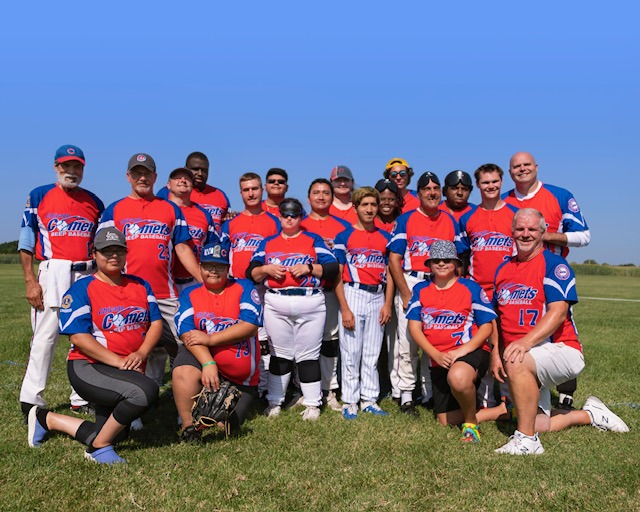
The NBBA introductory resources provide background on the sport and its organization.