
 Weather: 614-526-6500

Baseball and softball share the same idea—score runs while the defense records outs—but they don't use identical fields or rules. MLB bases are 90 ft apart; women's fastpitch bases are 60 ft apart. Pitching distances are 60 ft 6 in in MLB and 43 ft in women's fastpitch, while slow-pitch uses an arc. Ball size and baserunning restrictions also differ. The applicable league rulebook determines the details.
Baseball vs. softball at a glance
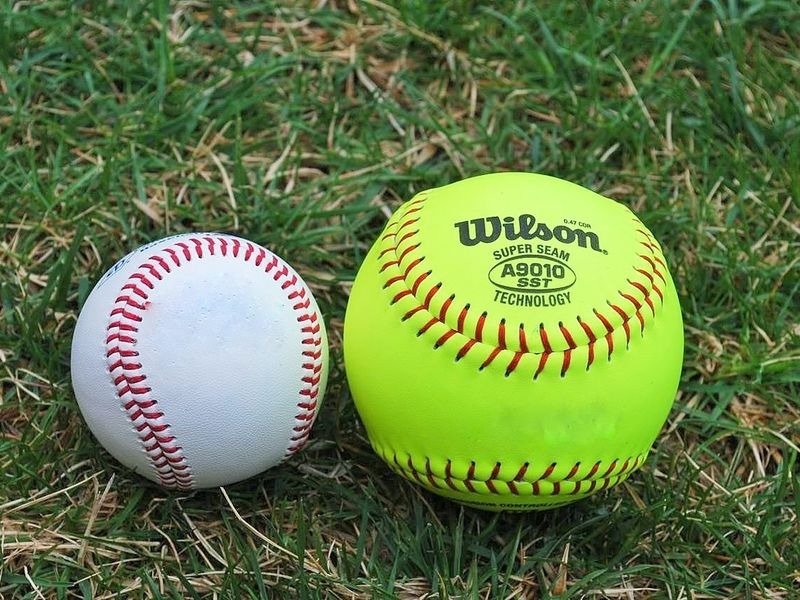
Both games revolve around hitting, baserunning, and defensive outs. The differences become clearer when you compare the diamond, the delivery from the pitcher, and what runners can do between pitches.
The table compares Major League Baseball with two USA Softball adult formats.
| Feature | MLB baseball | USA Softball adult women's fastpitch | USA Softball adult slow-pitch |
|---|---|---|---|
| Distance between bases | 90 ft | 60 ft | 70 ft |
| Pitching distance | 60 ft 6 in | 43 ft | 50 ft |
| Typical pitch delivery | Overhand or three-quarter arm | Underhand windmill or slingshot | Underhand with a regulated arc |
| Pitching surface | Raised mound | Flat pitching area | Slow-pitch pitching area |
| Defensive players | 9 | 9 | 10 |
| Regulation innings | 9 | 7 | 7 |
The seven innings for slow-pitch come from USA Softball's regulation-game rules. Recreational leagues can add time limits or early-ending provisions.
Sources: MLB field dimensions and USA Softball's adult playing formats.
Fastpitch and slow-pitch follow different rules
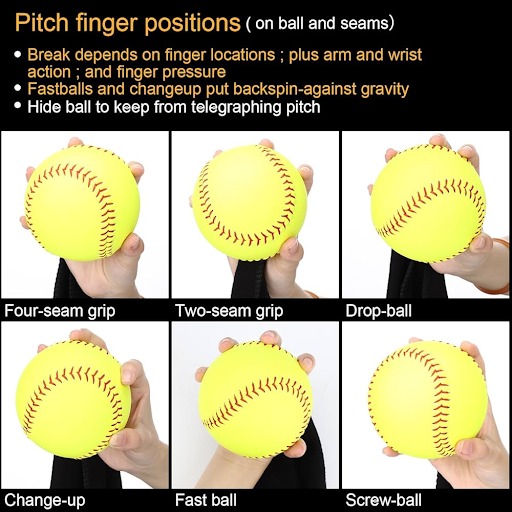
Softball is not one game. Fastpitch and slow-pitch differ in pitch delivery, field setup, and what hitters and fielders have to do.
In fastpitch, the pitcher throws underhand with a windmill or slingshot motion. The flat pitching area and shorter distance give the batter a different view of the release than a raised mound does in baseball.
USA Softball's adult women's fastpitch uses a 43-foot pitching distance. Its adult men's fastpitch format uses 46 feet.
Slow-pitch changes the hitter's job. The ball rises in a visible arc and drops toward the strike zone. Under USA Softball's adult rules, the pitch must rise at least 6 feet and no more than 10 feet above the ground. Slow-pitch also uses ten defensive players, as the table shows.
Hitters who come from windmill fastpitch face a different pitch in slow-pitch, even though both deliveries are underhand.
USA Softball also has a specialized adult 16-inch slow-pitch format played without gloves or mitts, with a 38-foot pitching distance. Its equipment and field setup differ from the standard adult formats in the table.
Field dimensions and ball size change the game
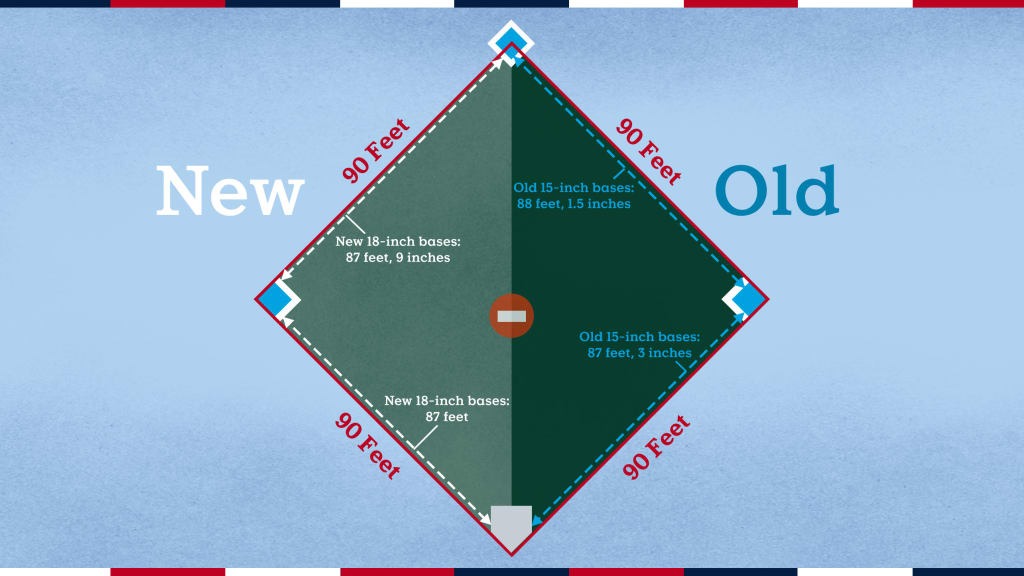
Field size decides how far throws, runners, and fielders have to go. In professional baseball the infield is a square with 90 feet between bases.
In MLB, the pitching plate sits 60 feet 6 inches from the rear point of home plate, on a mound 10 inches above the level of home plate.
A full-size baseball diamond means longer throws between bases than a standard adult women's fastpitch field. The longer distance to the pitcher also changes the view from the batter's box.
Little League baseball has more than one diamond size
| Little League baseball format | Basepaths | Pitching distance |
|---|---|---|
| Minor/Major player-pitch baseball on the standard small diamond | 60 ft | 46 ft |
| Intermediate (50/70) Division | 70 ft | 50 ft |
| Older divisions using the full-size diamond | 90 ft | 60 ft 6 in |
A Little League baseball player on the 60-foot diamond already knows softball's base distance before switching.
Youth softball has division-specific pitching distances
These are Little League softball tournament rules, and they apply to the listed tournament categories.
| Little League softball tournament division | Pitching distance | Specified ball circumference |
|---|---|---|
| Ages 8 to 10 | 35 ft | 11 in |
| Ages 9 to 11 and Majors | 40 ft | 12 in |
| Junior and Senior | 43 ft | 12 in |
Pitching distance grows with each division, and the youngest division uses the smaller ball.
Junior and Senior Little League softball use a 60-foot diamond.
Ball size is measured by circumference
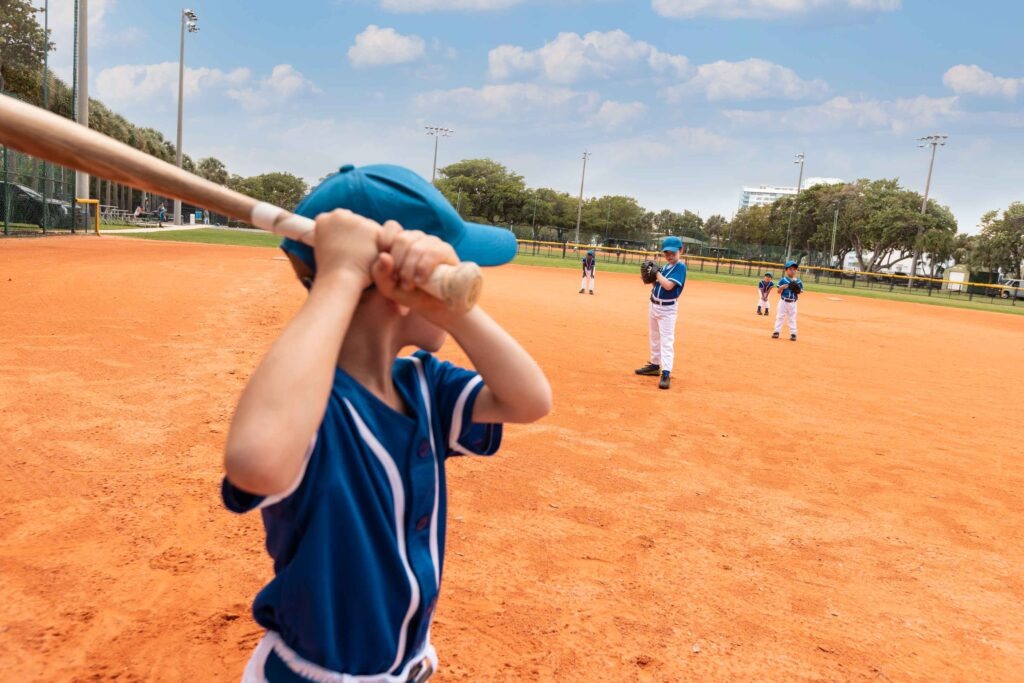
A standard baseball is about 9 inches around. Softballs are 11 or 12 inches around, depending on the division and format.
Circumference is the distance around the ball, so a 12-inch softball is not 12 inches across.
The bigger ball changes how your hand wraps around it and how it sits in a glove pocket. Players switching sports notice the difference as soon as they catch the ball or transfer it for a throw.
Outfield fence distances vary by league and facility, so no single outfield depth fits every baseball or softball field.
Why pitching and hitting feel different
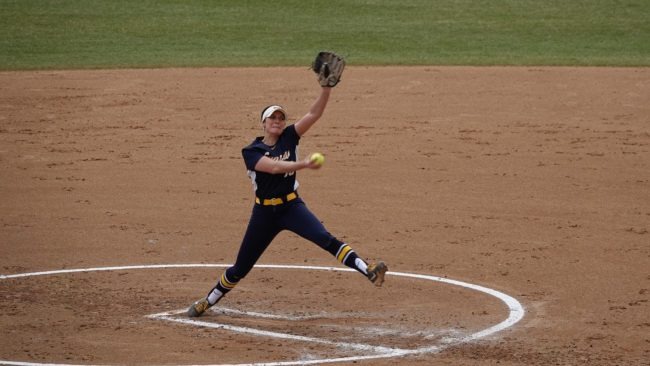
Hitters read the release, the path, and the arrival of the pitch. Each game presents those cues differently.
A baseball pitcher throws overhand or three-quarter arm from a raised mound. A fastpitch pitcher throws underhand from a flat area. Distance, movement, and release all change what the batter sees before deciding to swing.
Adult slow-pitch adds another problem. The ball climbs and then drops toward the plate, so a hitter used to direct pitches can start the swing too early.
The reverse switch causes timing trouble too. A slow-pitch hitter has to readjust to a more direct baseball pitch.
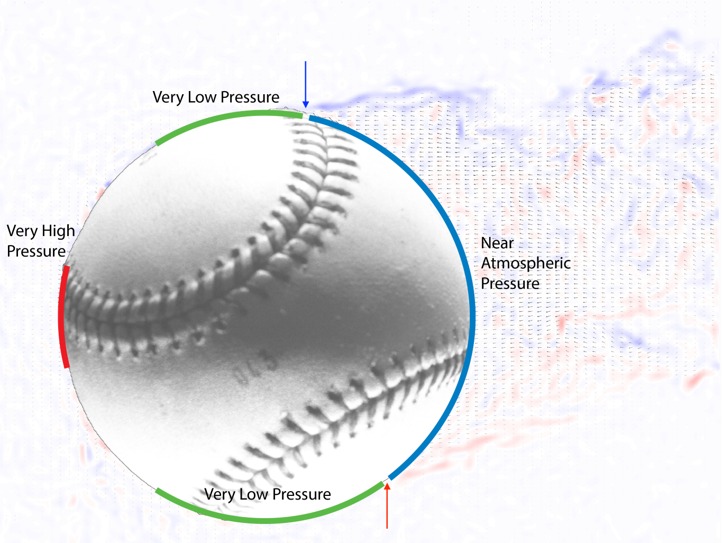
Fastpitch distance doesn't convert into an MLB speed.
If you're changing games, practice against the delivery your new format uses, since windmill fastpitch and adult slow-pitch call for different pitch recognition.
Baserunning and defense depend on the ruleset
Both sports let runners advance and score, but the moment a runner may leave a base differs. Little League softball shows this well because the rule changes by division.
USA Softball fastpitch allows base stealing under its rules. Adult slow-pitch has divisions with stealing and divisions without. Where stealing is allowed, a runner may leave when the pitch reaches the front edge of home plate. For base runners, force plays, and tag-ups, see lead-offs, passed balls and steals: the division decides.
Leaving a base early
- Minor League softball and below: Under Little League rules, runners may leave when the pitched ball reaches the batter.
- Major League softball and above: The standard trigger is the pitcher's release. A local Major Division league may adopt the stricter option, where runners wait until the ball is batted or reaches the batter.
- Before the trigger: A runner who leaves early risks being called out.
Picture a runner on first in a Little League softball Major Division game. She starts toward second before the pitcher releases the ball. That is early under the standard Major Division rule and under the stricter local option.
The pitching-circle or look-back rule
Little League softball also has an eight-foot-radius pitching circle around the pitching plate.
When the pitcher holds the ball inside the circle and isn't attempting a play, a runner who is off base must promptly continue toward the next base or return.
Take a batter-runner who walks and rounds first base. Under the official interpretation, the runner may make an initial stop, then must promptly choose to advance or retreat.
A second stop after that choice, with the pitcher holding the ball in the circle and no qualifying defensive play, can result in an out. A real attempt to play on the runner, including a relevant throw fake, changes the situation and the runner's options.
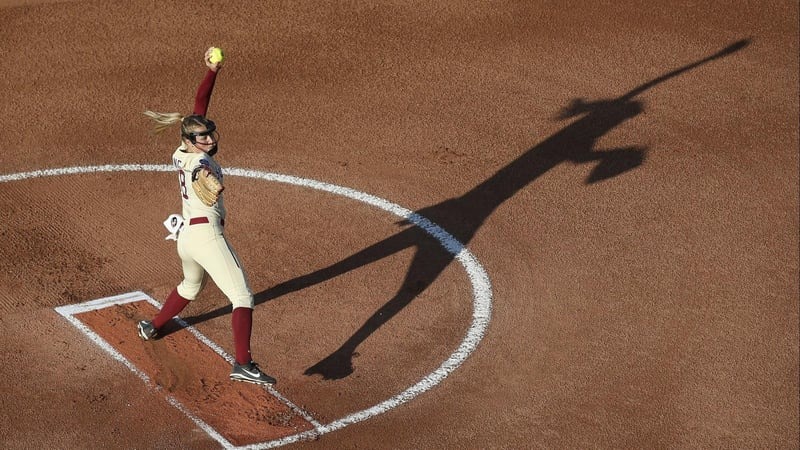
Little League's guidance treats about three seconds as prompt.
Examples and conditions are in Little League's circle-rule guidance.
Defensive positioning and lineup differences
Field dimensions affect where defenders stand and how they cover bases. Shorter throws and different base spacing change positioning, especially for infielders.
In standard fastpitch, a designated player and FLEX arrangement can affect the lineup, but the designated player does not automatically become an extra defensive fielder. Adult slow-pitch's ten-player defense is a separate ruleset.
Can baseball and softball share equipment?
Some bats, balls, and gloves feel familiar in both sports, but your league's bat certification rules decide which bats you can use. For USABat, BBCOR, and Little League divisions, see what USABat, BBCOR and USSSA bat marks mean.
Bat standards are specific to the league
Little League baseball shows how certification varies even within one sport.
- Major Division baseball and below: The USABat standard applies to covered bats. Compliant solid one-piece wooden bats can be used without a USA Baseball marking.
- Intermediate and Junior League baseball: The rules permit USABat or BBCOR bats.
- Senior League baseball: BBCOR is the standard for covered non-wood bats, and the wood-bat provisions still apply.
Little League states that its baseball USABat standard does not set bat requirements for Little League softball.
A bat with a USA Baseball mark can therefore be fine for a baseball division and still fail a softball division's certification.
For division and construction exceptions, see Little League's USA Baseball bat standard guidance.
Gloves and balls: check the fit
Softballs are larger than baseballs, and glove pockets and patterns differ by sport and position. An existing glove can work in a recreational crossover game.
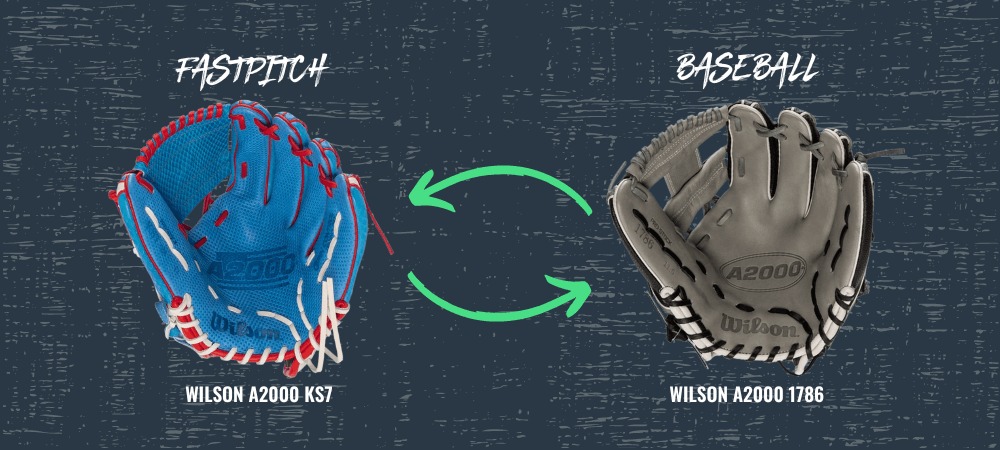
Before you buy or reuse gear, check three things:
- Bat approval: Match the bat's construction and certification to your league and division.
- Ball size: Confirm the size the competition specifies.
- Glove: Make sure you can receive the ball securely and transfer it comfortably for a throw.
Switching between baseball and softball
Skills carry over: throwing, catching, tracking a batted ball, and working with teammates.
| Skill or situation | What often carries over | What changes by format |
|---|---|---|
| Throwing and catching | Basic throwing and receiving skills | Ball size, distance, and glove feel |
| Batting | Contact fundamentals and body coordination | Release presentation, trajectory, and timing |
| Infield defense | Ground-ball technique and communication | Base spacing and defensive positioning |
| Baserunning | Force plays, base awareness, and scoring | Departure timing and circle-rule requirements |
| Equipment | Experience using bats and gloves | Certification, ball fit, and league approval |
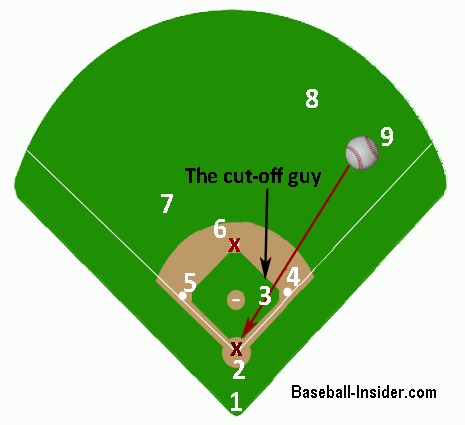
An infielder moving from adult slow-pitch to a full-size baseball diamond makes a longer throw across the infield. Fielding mechanics carry over, but positioning and the throw have to cover that extra distance.
Is either sport harder or safer?
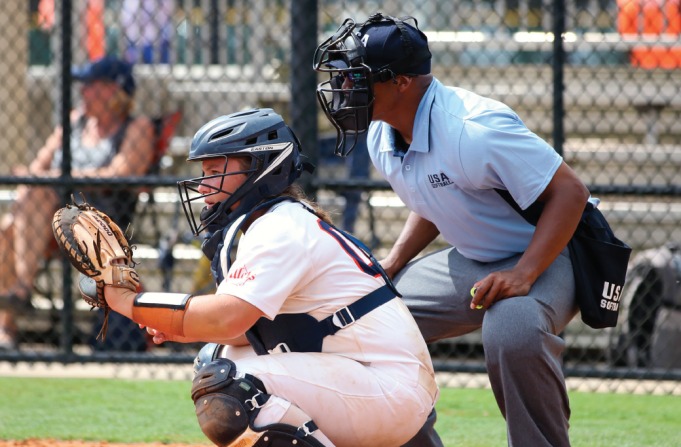
Neither sport is harder across the board. Slow-pitch hitters time an arcing ball, fastpitch hitters time a windmill delivery, and fielders handle different ball sizes and distances. No one can say which sport is safer, because comparable injury evidence across ages, formats, and competition levels does not exist.
Which sport should you play?
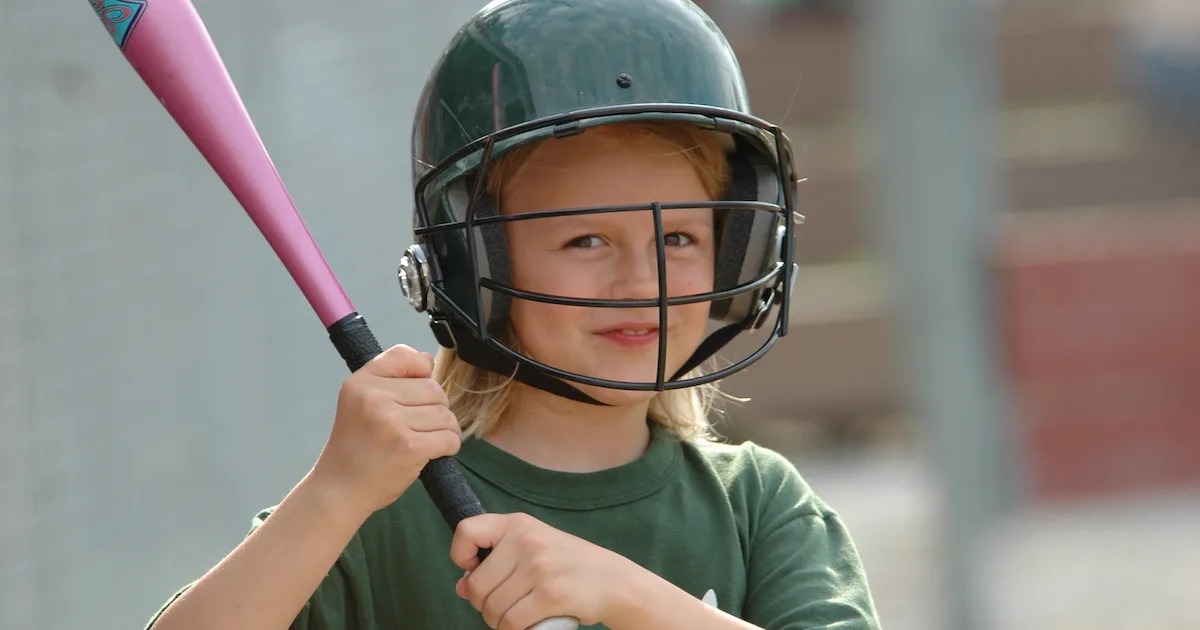
Baseball retains the familiar baseball diamond and game structure. Fastpitch offers a different pitching delivery and a more compact field; slow-pitch can be an accessible recreational option where a team plays nearby. The available league and the player's interests matter alongside the rule differences.
For young players, teammates and familiar routines can outweigh a rulebook comparison. Changing sports may also mean new practice schedules and equipment.
Wanting to stay in baseball is a valid choice. Girls can play Little League baseball under the program rules, so sex alone is no reason to treat softball as the required next step.

Little League baseball and softball use different league-age cutoffs. Baseball uses a child's age on August 31 of the relevant year. Softball uses the child's age on December 31 of the preceding year. The league-age chart for the season decides division eligibility.
- Start with preference: Decide which sport and style of play the player wants.
- Find a program: Confirm that an age-appropriate program exists and that the player meets its sign-up requirements.
- Try it first: If the organizer offers an intro practice or first session, go before you commit to a season.