
 Weather: 614-526-6500

A youth bat needs to satisfy two tests: the league allows it, and the child can swing it with control. An undamaged, eligible current bat may be all the player needs. Otherwise, test two permitted sizes before choosing a replacement.
A sizing chart may suggest a bat that feels awkward in a child's hands. Another bat may swing well but carry a certification the league won't accept. Neither problem is solved by price alone.
Check the league's bat rules before choosing a size
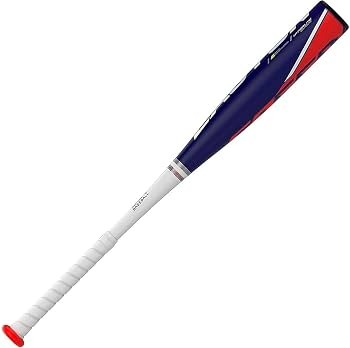
Eligibility comes before feel. Little League and USSSA can require different certifications, so a player on teams in both systems must meet each team's rules.
Little League publishes its baseball bat information by division. For nonwood bats, the main standards are:
| League or division | Standard | What changes the choice |
|---|---|---|
| Little League Tee Ball, Minor and Major | USABat | Tee Ball-only bats have extra rules, covered below. |
| Little League Intermediate (50/70) and Junior | USABat or BBCOR | Either standard can qualify under the division rules. |
| Little League Senior | BBCOR | The older division requires a different certification. |
| USSSA events | USSSA event marking | Eligibility follows USSSA's equipment and tournament rules. |
Under Little League division provisions, solid one-piece wood-barrel bats are exempt from the USA Baseball logo requirement. All other bat dimensions and playing rules still apply.
Find your organization, division and event in its written rules, and note the allowed marking before you shortlist anything. A tournament's own requirements override the general guidance. USSSA maintains separate bat marking rules.
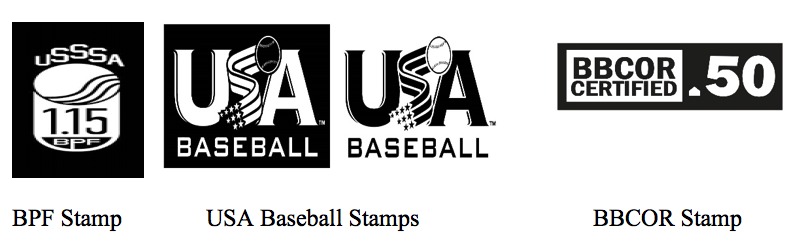
Under Little League's USABat rules, certified Tee Ball bats 26 inches and shorter must display the USA Baseball mark and “ONLY FOR USE WITH APPROVED TEE BALLS.” They can be used in coach-pitch or machine-pitch Minor divisions only when approved Tee Balls are used. The USABat standard has no general drop-weight limit, but a league or event can add its own equipment restrictions. If you need the marks explained, read what USABat, BBCOR and USSSA bat marks mean.
In a July 7, 2026 clarification, Little League said the transition to USA Baseball oversight of the USA BBCOR standard would not affect its 2027 seasons.
Use a size chart to shortlist two lengths
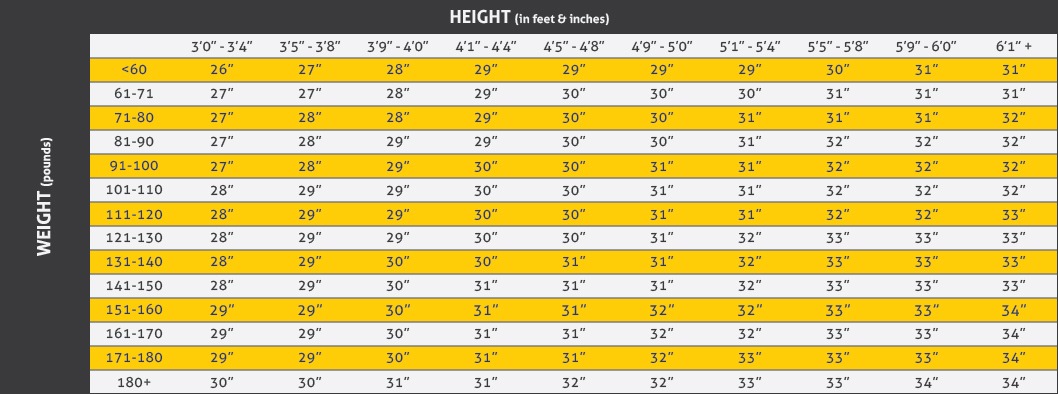
Youth bat sizing charts use height, age and sometimes weight. They give you a starting length, and your child's ability to swing that length decides whether it makes the shortlist.
Measure your child's height and check a credible youth baseball sizing chart. Take the suggested length and one neighboring legal length, usually shorter. Two bats give you a manageable comparison without forcing you to order several expensive models.
If a chart suggests 30 inches, compare it with a 29-inch bat.
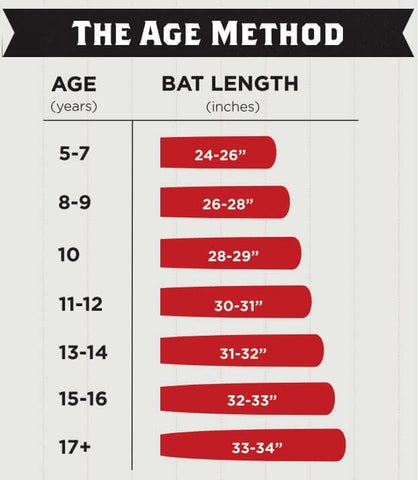
Parents sometimes buy extra length so a growing child can use the bat next season. The extra reach also changes how the barrel moves. A player who struggles to direct the longer bat today gets little benefit from the added inch.
Length is the end-to-end measurement in inches. Barrel diameter is the width of the hitting area.
Understand drop, actual weight and swing balance
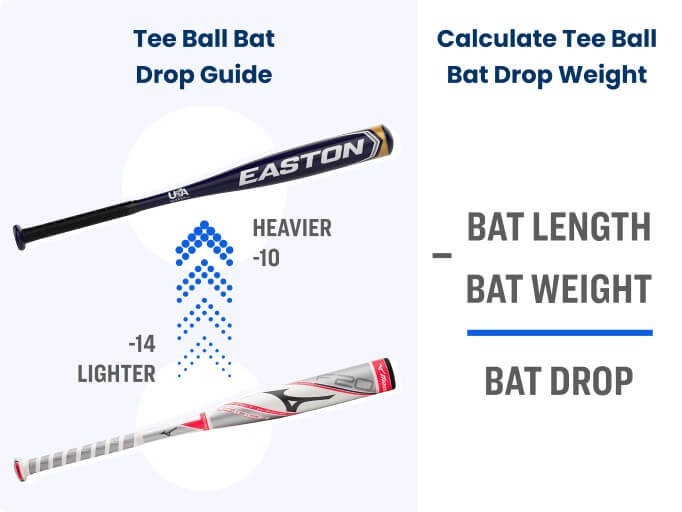
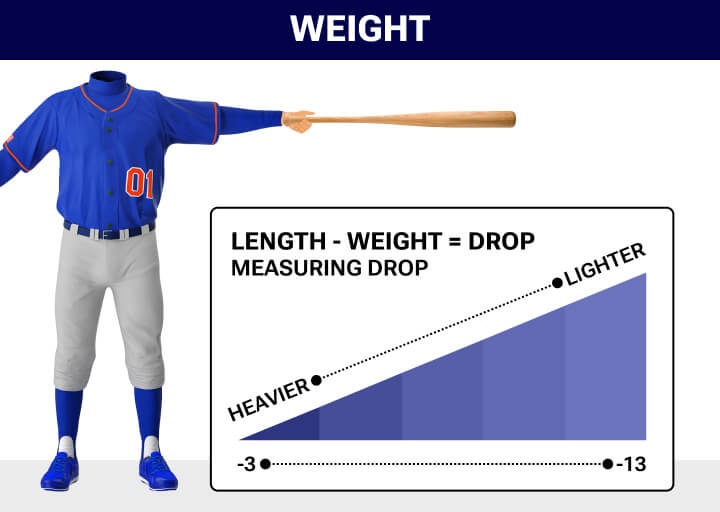
Drop is the listed weight in ounces minus the bat's length in inches. It is commonly printed as a negative number.
- 30 inches and 20 ounces: 20 minus 30 gives a -10 drop.
- 30 inches and 18 ounces: 18 minus 30 gives a -12 drop.
At the same length, the second bat is two ounces lighter. Weight distribution affects handling, and measured weight can differ from the label.
Weight toward the barrel makes the bat harder to rotate. That resistance is called moment of inertia, and shoppers often call it swing weight. Two bats with the same drop can still feel different when swung. A balanced bat carries its weight closer to the hands, while an end-loaded bat carries more of it toward the barrel. For players still learning barrel control, that difference affects comfort and swing effort even at the same drop.
Crisco and colleagues studied three bats with different moments of inertia. Their 2018 research recorded 306 swings from 22 male players aged 13 to 18 and measured forces and bat-tip speed. The abstract is available through PubMed.
Bat Digest weighed more than 100 bats and found differences between stated and measured mass. USABat models averaged about 1.13 ounces above their labels.
Calculate the drop for each bat. When measured mass and balance information exist for the models you are considering, compare them with the labels before the swing trial.
Compare bats during real swings
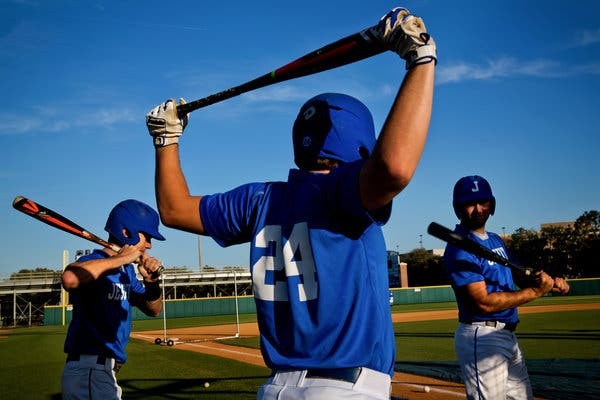
A supervised swing trial lets your child compare the two eligible bats in motion. Keep the pitch source and pace similar, and have your child take several comfortable swings with each bat.
Have a coach watch while your child says which bat feels comfortable, and record what you see:
| Observation | What to record for each bat |
|---|---|
| Starting the swing | Easy, hesitant or awkward |
| Barrel control | Steady or hard to direct |
| Contact | Where contact occurs on comparable pitches |
| Finish and comfort | Balanced, strained or uncomfortable |

Pitch variation, fatigue and unfamiliarity can affect a short trial, so look for differences that repeat across swings.
If the store has no batting cage, a certified loaner from a coach or teammate can serve as a reference. If you shop online, that trial lets you learn before you buy several unfamiliar bats.
Weigh construction, durability and feel
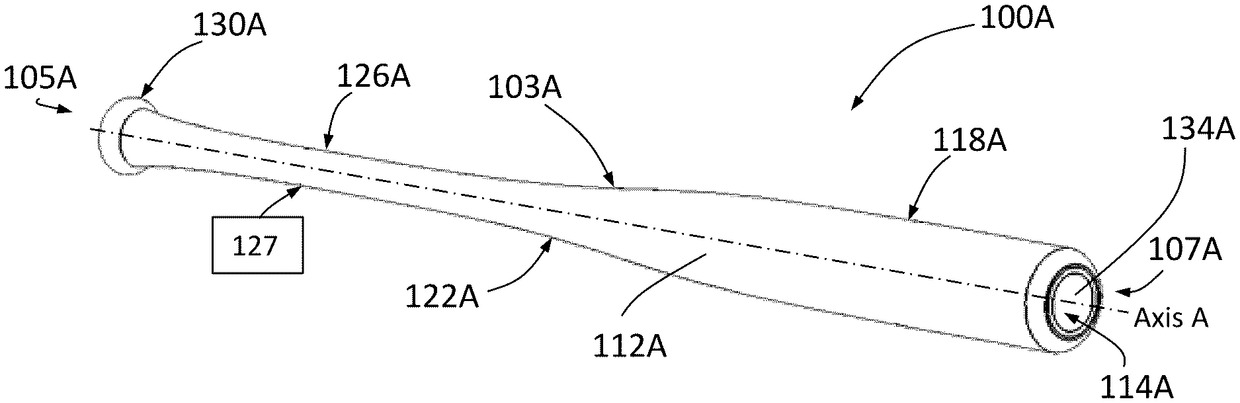
Alloy and composite bats, like one-piece and two-piece constructions, differ by model in feel, price, care requirements and durability. Read the specifications for the eligible bats on your shortlist and weigh them against how your child handled each one.
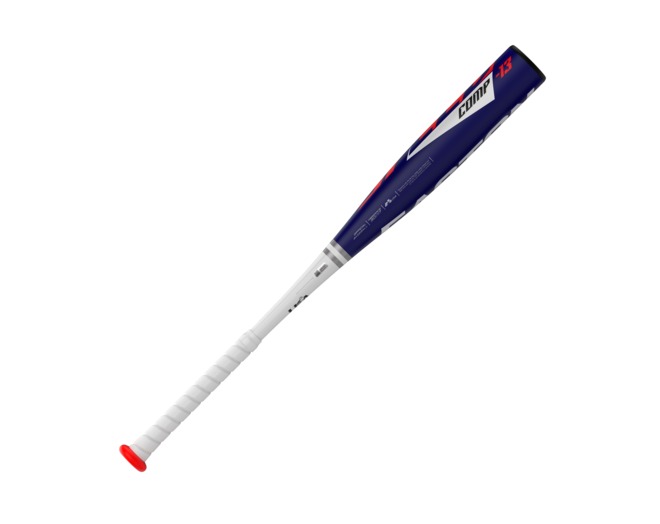
In a youth batting-cage study, Smith, Lyu and Nevins found that participant ability had a larger effect on ball exit speed than bat type. Some hollow bats produced exit speeds up to 5% higher than traditional solid-wood comparison bats.
A familiar brand, a distinctive barrel or a higher price can make a bat tempting. What counts is whether the construction, durability and handling justify the cost for your child.
Inspect the exact model, size and condition
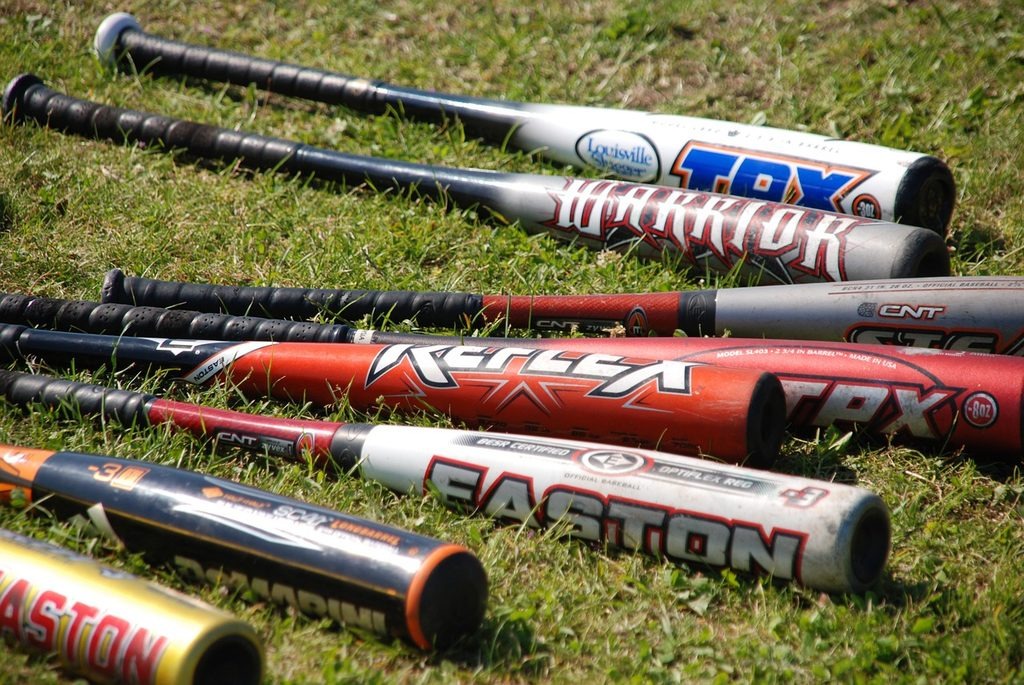
Some certified bats later lose approval for specific models or sizes. USA Baseball maintains a decertified bats list. USSSA keeps its own withdrawn or noncompliant list and also withdraws USA Baseball-stamped bats that USA Baseball has withdrawn.
USA Baseball's May 3, 2018 notice identified the 30-inch, 20-ounce (-10) Easton Ghost X with a 2 5/8-inch barrel, model codes YBB18GX10 and LL18GHX. Other certified sizes in the Ghost X family were distinguished from that specific decertification.
Match the stamped length, drop and model code to the official withdrawn or decertified list. If you buy used, examine the bat itself and make sure the certification marks are still legible.
- Barrel and surface: Look for cracks, sharp edges, dents or flattened areas.
- End cap and knob: Check for loose or damaged parts.
- Alterations: Watch for added handle devices or other modifications that the playing rules prohibit.
Little League assigns pregame equipment-inspection responsibility to managers and coaches. Stop using a damaged or questionable bat until its eligibility and condition are checked.
Is gripping higher on the handle the same as adding a choke-up device?No. A player can move their hands higher on the handle without installing an accessory. Little League's bat-alteration restrictions prohibit attached choke knobs and choke-up assistance devices.
Investigate contact problems before changing bat size
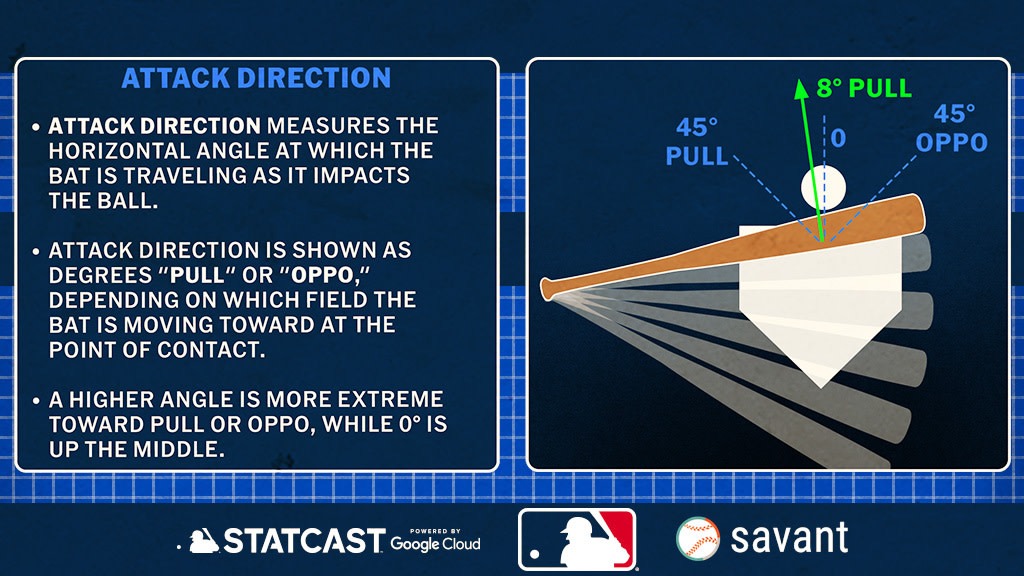
Hits near the end of the barrel can trace back to timing, position in the batter's box, reach or barrel control. An extra inch changes both reach and the effort needed to move the barrel, so one awkward finish or a few off-end hits can mean several different things. Have a qualified coach watch a pattern of swings before you change length or weight to fix a suspected mechanics problem. For batting tees, plate reach and swing timing, read how to learn to make contact on a batting tee.
Decide whether to keep, borrow or buy
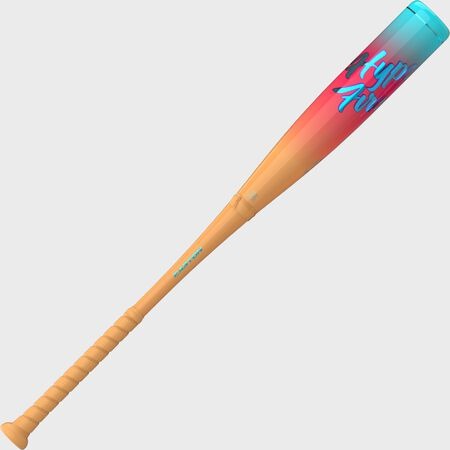
A pricier model earns consideration when it solves a genuine fit, eligibility, condition, handling, or durability issue. For a practical purchase sequence, see buy, borrow, or wait: an order that avoids repeat purchases.
| Decision | Situation |
|---|---|
| Keep | Current bat is eligible, sound and comfortable to control. |
| Borrow or try | Fit or feel is still uncertain. |
| Buy | Current bat has a clear rules, condition or fit problem. |

Read the return policy and the warranty for the exact model before purchasing. Once a bat has been used, return eligibility may change; warranties cover specified defects under their own terms.