 Weather: 614-526-6500

A glove size chart narrows the search; trying on the glove decides it. Choose the correct throwing-hand version (RHT or LHT) for the player's age and position, then test whether it stays secure, closes comfortably, and remains easy to control. A specialized position or stiff leather may call for a different design.
A glove can look ideal on a shelf and feel wrong as soon as a player wears it. Fingers may disappear into oversized stalls, the wrist may slide during a catch, or the leather may resist closing around the ball.
Whether it's a first glove, a replacement for an outgrown one, or a return to the sport, size is only a starting point. The better glove is the one the player can actually handle.
Which Hand Should Your Baseball Glove Go On?
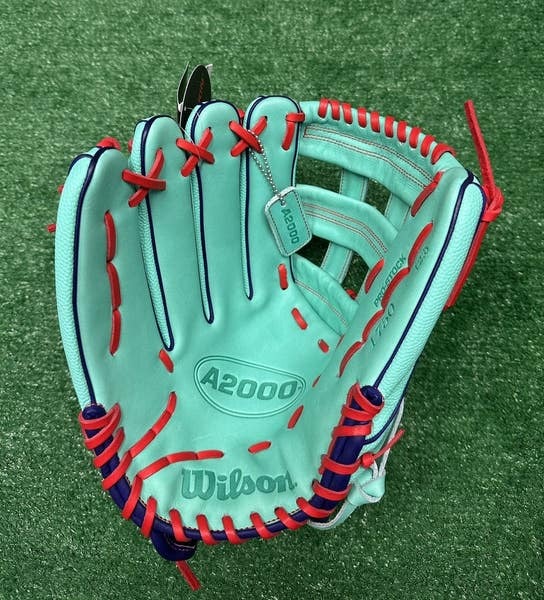
Baseball glove listings use RHT and LHT to show the hand a player throws with. The fielding glove goes on the opposite hand, which leaves the throwing hand free to release the ball.
- RHT (right-hand throw): The player throws with the right hand and wears the glove on the left.
- LHT (left-hand throw): The player throws with the left hand and wears the glove on the right.
Photos shot from odd angles are easy to misread, so go by the label.
For a child, have them make a normal throwing motion to find the throwing hand, even if they write with the other one.
What Size Baseball Glove Should You Start With?
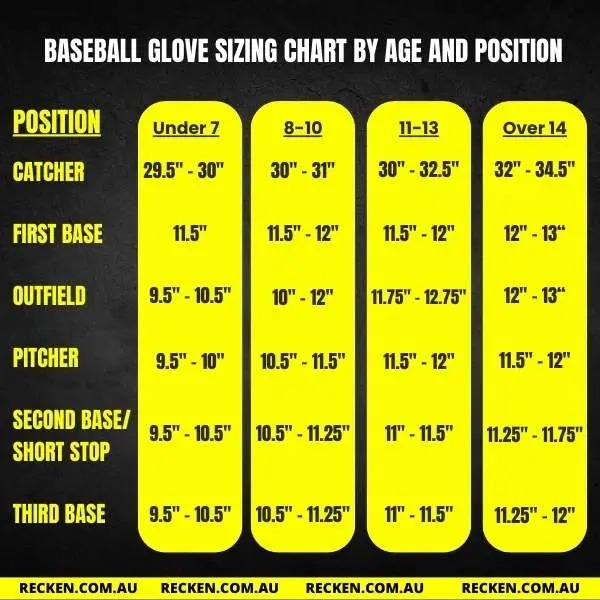
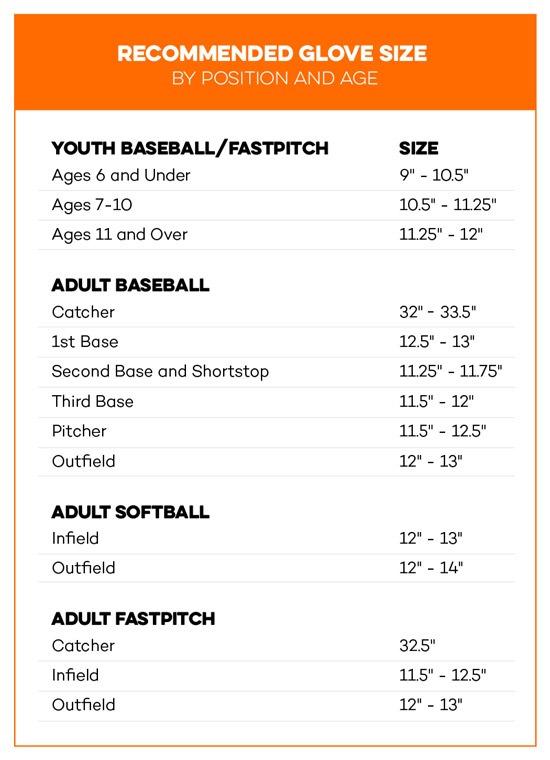
Age and fielding position give you a range of glove lengths to compare.
Rawlings' baseball glove sizing guide gives these ranges:
| Rawlings category | Age | Position | Glove length |
|---|---|---|---|
| T-ball | 3 to 6 | All positions | 8.5 to 10 inches |
| Youth | 7 to 12 | Infield | 10.25 to 11.5 inches |
| Youth | 7 to 12 | Outfield | 11.5 to 12.25 inches |
| Youth | 7 to 12 | First base | 11.5 to 12 inches |
| Adult | 12+ | Infield | 11.25 to 12 inches |
| Adult | 12+ | Outfield | 12 to 12.75 inches |
| Adult | 12+ | First base | 12 to 13 inches |
The youth and adult categories overlap at age 12. Rawlings uses those labels for glove sizing only, and leagues set their own eligibility rules. Other manufacturers and retailers divide ages differently, and some publish different length ranges, so use the maker's own chart when you have it.
For an 11-year-old who mainly plays infield, the youth-infield row gives a starting range of 10.25 to 11.5 inches.
What does an 11.5-inch glove measurement describe?
A conventional fielding glove is measured along the glove from the tip of the index finger to the middle of the heel. The number describes glove length, not the player's hand length. BaseballMonkey's glove buying guide explains how this measurement works.
Does the Glove Fit Your Hand and Close Easily?
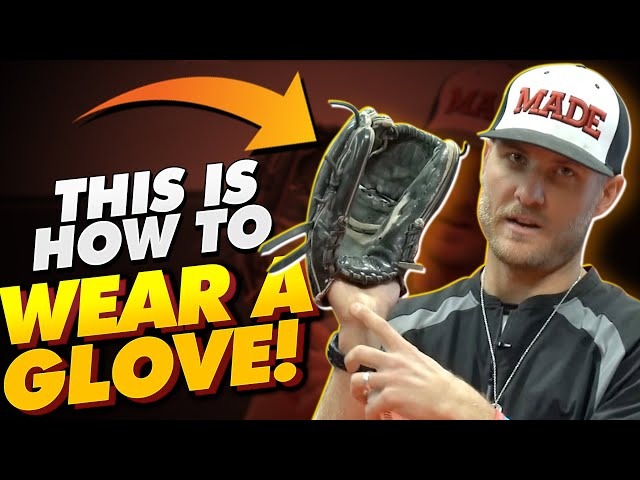
The fit test asks three questions. Does the glove stay secure on the hand? Can the player close it? Can they control the pocket while fielding?
Break-in softens stiff leather. It doesn't tighten a loose wrist.
Try the glove with the person who will use it
- Slide the hand in. The fingers should enter the stalls without cramping. A hand that feels restricted, painful, or numb needs a different fit.
- Check the opening with the arm relaxed. Let the arm hang. If the glove shifts or feels ready to slip off, it's too loose.
- Open and close the pocket. Have the player squeeze the glove several times without pulling it shut with the other hand. Look for an easy closing motion and a pocket that holds the ball.
- Field an easy toss. Watch whether the glove stays under control during a gentle catch and when the player picks up the ball.
If the glove fits securely but resists closing, ask whether the leather needs working in and whether the player has time for that. If the fingers feel cramped or the glove shifts around the wrist, move to a model with a different fit or construction. For gloves, youth bats, and batting helmets, see fit comes before a premium glove or expensive bat.
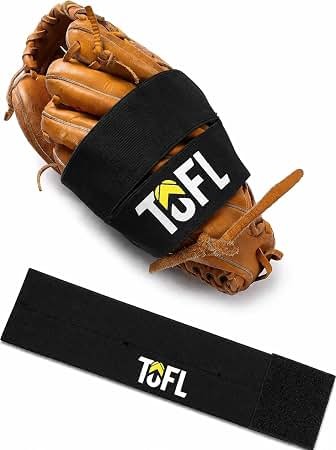
Two gloves with the same stamped length can fit hands differently. Rawlings describes its ContoUR design with a smaller wrist opening, narrower and lowered finger stalls, and an adjustable wrist. For a smaller player, a comfortable model beats fancier leather.
Which Glove Design Fits Your Fielding Position?
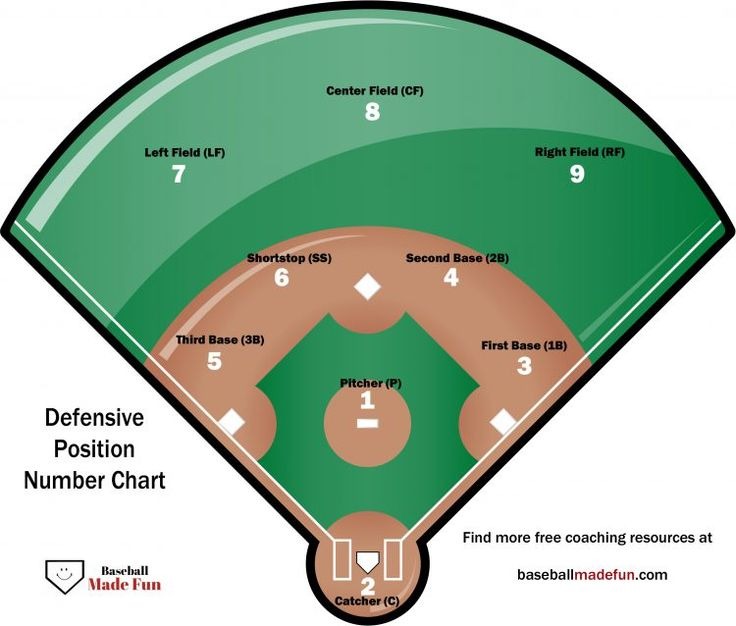
Position changes which glove features matter. An infielder wants quick access to the ball for a throw, while an outfielder benefits from a longer glove and deeper pocket. For pitchers, catchers, and shortstops, see which baseball position to try first.
| Fielding role | Useful characteristics | Main trade-off |
|---|---|---|
| Middle infield | Compact shape, shallower pocket | Quick ball access, less catching depth |
| Outfield | Longer glove, deeper pocket | Reach and ball security, more bulk |
| Pitcher | Comfortable fielding pattern, sometimes a concealing web | Grip concealment and personal feel, plus fielding |
| Multiple positions | Balanced utility pattern | Versatility, less specialization |
A recreational player who alternates between second base and the outfield can get by with one utility glove. A player who fields one settled position may want a more specialized pocket or web.
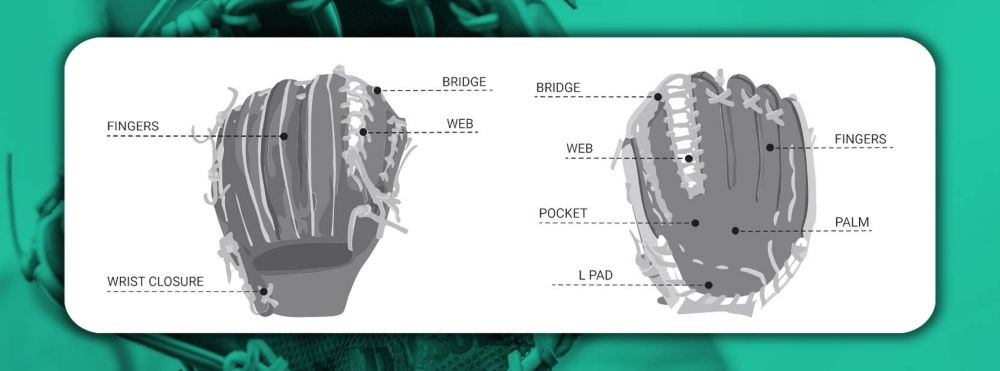
When do you need a specialized mitt?
First-base mitts have a distinct receiving shape, so the Rawlings chart lists their sizes in separate first-base rows. Catcher's mitts use circumference-based sizing.
Web styles such as I-web, H-web, and basket web refine the choice once the position is set. Compare them by what the shape does best: retrieving the ball quickly, securing a catch, or concealing the grip. For ground balls, see how to field a routine ground ball.
Start with the position the player fields most often.
How Much Break-In Time Do You Have?
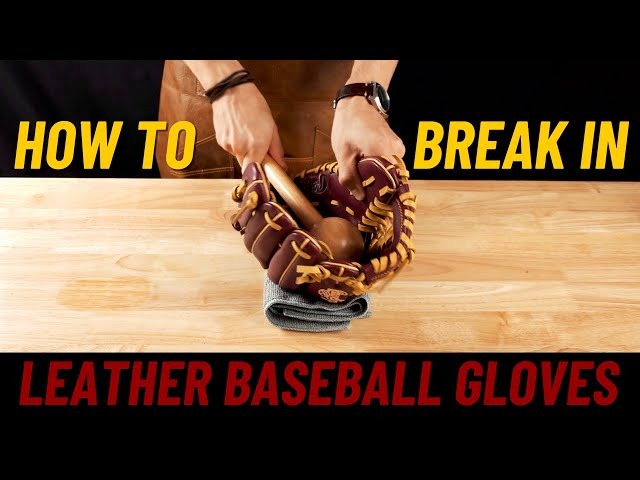
A glove you need for next week's game should already be flexible. In the offseason you have time to work in stiffer leather. Rawlings says some higher-end leather needs extra break-in. Its glove break-in guidance warns against baking, boiling, steaming, other heating methods, and too much oil, which can damage its gloves and affect warranty coverage.
Should You Buy for Growth, Buy Used, or Pay More?
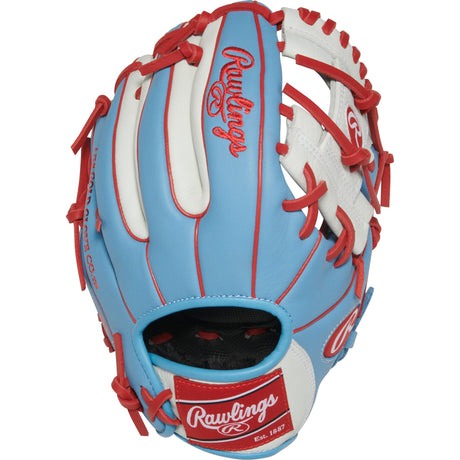
Buying a slightly larger glove for growth works when the player controls it comfortably today.
Spending more buys materials or features an experienced player values. A beginner on a modest budget can choose well with a less expensive glove that already fits and does the fielding job. A seasoned player with a settled position may prefer a stiffer model and accept the break-in time.
New, used, or sized for future growth?
| Buying approach | Benefit | What to check |
|---|---|---|
| New, flexible glove | Brand new | Actual fit, closure, and construction |
| New, stiffer glove | Built for more seasons | Time needed to become playable |
| Used glove | Already flexible, costs less | Wear and shape from previous use |
| Larger glove for growth | More seasons of use | Hand security, control, and bulk today |
When buying used, inspect the laces, pocket, palm, lining, and padding of the actual glove. A used glove is shaped to its last owner's hand. It can feel comfortable at first and still not suit the next player.
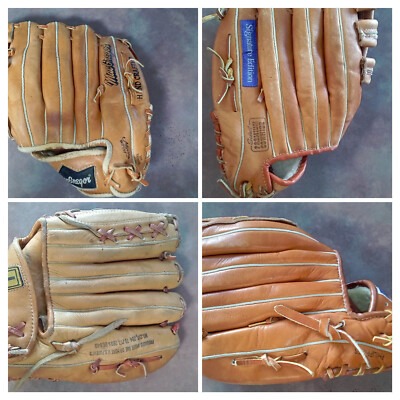
Between two finalists, weigh present-day control and fit against condition and useful life.
What Should You Verify Before Buying?
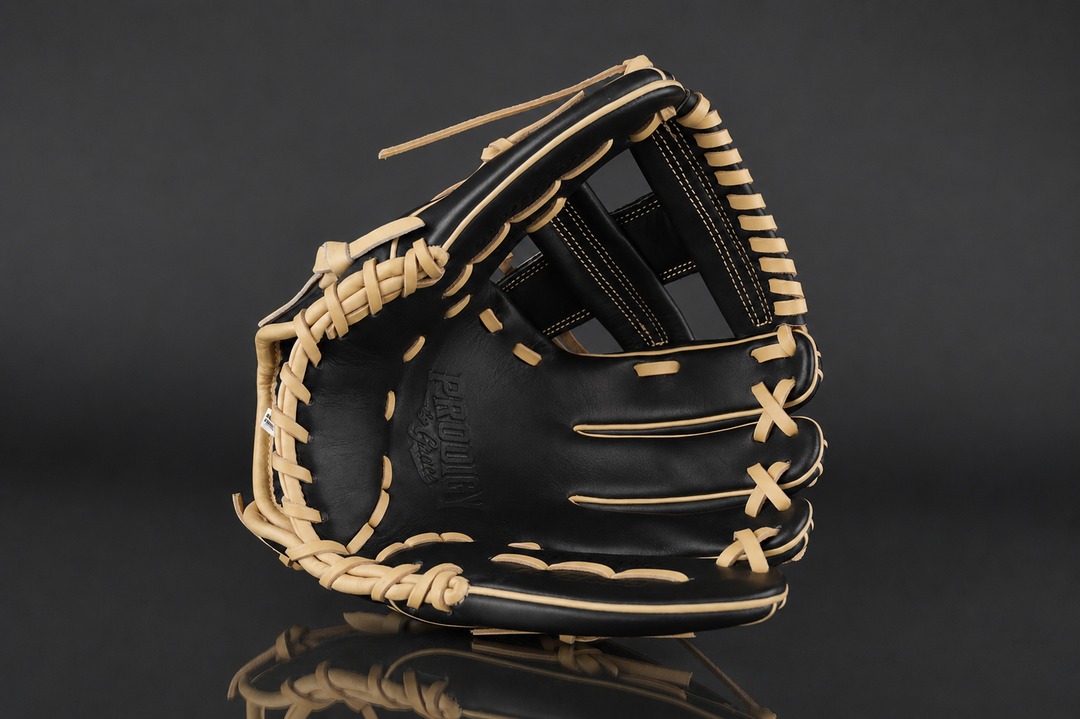
One product listing may contain several sizes, hand orientations, and fits. The exact variant matters, particularly when you're ordering without trying it on.
If you can't try the glove on, compare the listed wrist opening, finger-stall design, and wrist adjustment across your shortlist. A tapered or smaller-hand pattern is a good candidate for a player who has found standard hand stalls loose.
Final purchase checklist
- Equipment category: The listing should be for a baseball fielding glove or specialist mitt, not a batting glove or softball-specific model.
- Model and variant: Match the name, SKU, or option identifier to the item you selected. Photos may show another option in the same family, so keep order details that show the variant and condition. You can then spot a mismatch on delivery.
- Throwing-hand option: Check that the cart says RHT or LHT to match the player's throwing hand.
- Size and fit pattern: Check the stamped length and any youth, smaller-hand, or adjustable-wrist version listed.
- Condition: For secondhand gloves, ask for clear photos of the actual glove and its wear points.
- Return and exchange terms: Ask whether you can try on an unused glove and exchange it, and whether use or conditioning changes eligibility.