
 Weather: 614-526-6500

For the 2027 Little League Baseball season, league age means the age a child reaches by August 31, 2027. It determines national division eligibility, but local placement and certain rule-based exceptions can narrow or change the options—particularly for a 12-year-old seeking Minors.
A nine-year-old may be nationally eligible for Majors even when a nearby league reserves that division for older children. An 11-year-old meets the national age range for three different divisions. Eligibility and actual placement are separate questions.
Little League Baseball has six national divisions, spanning Tee Ball to Senior League. Local terms such as AA and AAA add another layer, as do assessments, waivers, and fees. The distinctions below explain what a registration form does—and doesn't—tell you.
How to calculate Little League baseball age for 2027
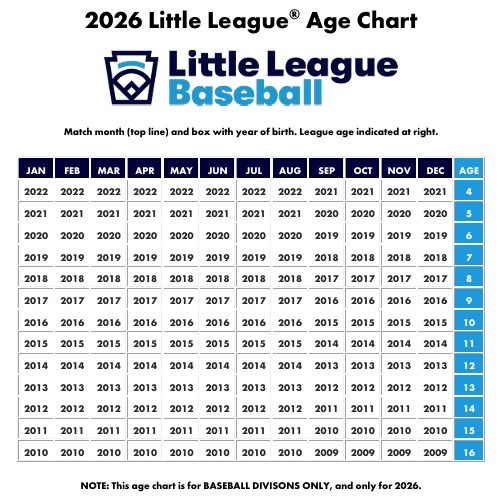
For baseball, league age is the age your child reaches by August 31 of the season year. For 2027 that date is August 31, 2027, even if tryouts or registration happen earlier.
Enter the child's full birth date into Little League's official league-age calculator and chart. The 2027 Baseball Age Chart covers every age from four to 16. Two children born one day apart show how the cutoff works:
- August 31, 2016 birthday: The child turns 11 on the cutoff date, so the 2027 baseball league age is 11.
- September 1, 2016 birthday: The child turns 11 the next day, so the 2027 baseball league age is 10.
Classmates can have different baseball league ages. The rule uses birthdays and ignores school grade.
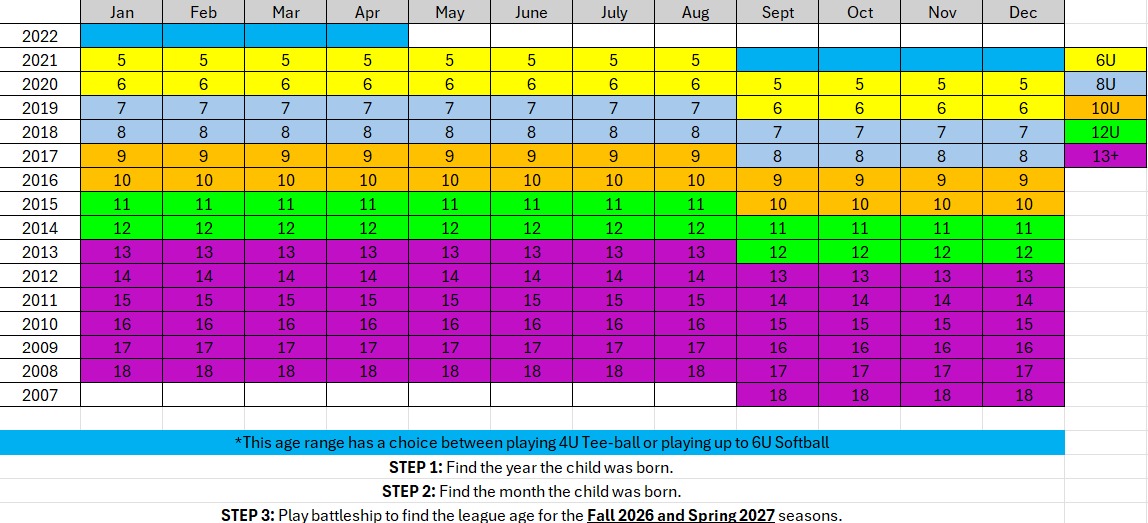
Little League Softball uses a different age-determination date. Use the Baseball chart when registering for Little League Baseball.
Little League baseball divisions and their age ranges
Six national divisions cover Little League Baseball. Several age ranges overlap, and the broad Minor League range has extra conditions for younger and older players.
| Division | National league ages | Playing format or important condition |
|---|---|---|
| Tee Ball | 4 to 7 | Introduction to hitting, fielding and team play |
| Minor League | 5 to 12, conditional | Coach-pitch, machine-pitch or player-pitch levels; entry conditions at ages 5 and 6, plus an age-12 exception |
| Major Division (Majors) | 9 to 12 | Standard Little League Baseball division; local age bands can be narrower |
| Intermediate (50/70) | 11 to 13 | 50-foot pitching distance and 70-foot bases |
| Junior League | 12 to 14 | Transition to a conventional-sized field |
| Senior League | 13 to 16 | Conventional-sized field for older players |
Minors is the range to read twice. The 5-to-12 span includes special cases: ages five and six enter coach-pitch or machine-pitch after prior Tee Ball participation, and a 12-year-old who wants Minors needs the Regulation V(a) exception described below.
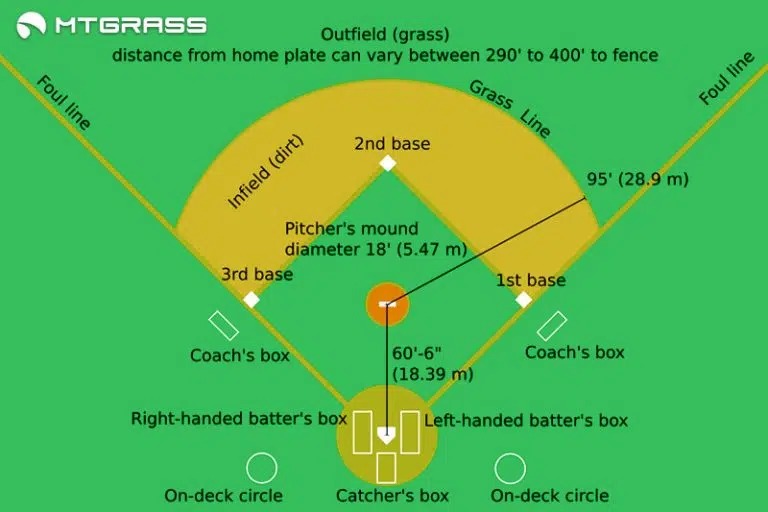
The field changes with the division. Majors use a 46-foot pitching distance and 60-foot bases. Intermediate uses 50-foot pitching and 70-foot bases. Junior and Senior League use a 90-foot diamond with a pitching distance of 60 feet, 6 inches.
These ranges and dimensions come from Little League's official Baseball division descriptions.
Why your child may qualify for more than one division
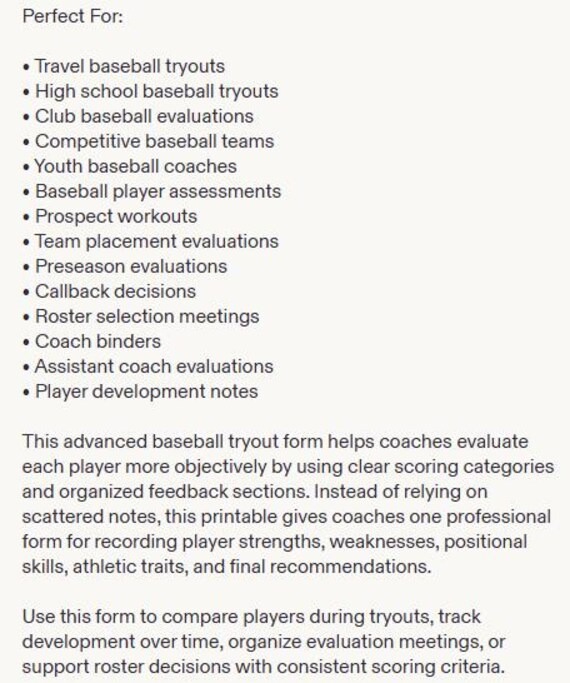
Your child's age puts them in range for a division, but the local league picks the team. Little League lets local programs use narrower age bands and run their own evaluations or drafts. For young players, families and local leagues, see what age and division can your child play in.
| League age | Divisions open nationally | Example of a local placement difference |
|---|---|---|
| 9 | Minors and Majors | A league that runs Majors for ages 11 and 12 can place the player in Minors |
| 11 | Minors, Majors and Intermediate | Local evaluations, drafted rosters and available teams can decide the assignment |
| 13 | Intermediate, Juniors and Seniors | The league may offer only some of those divisions or use narrower age bands |
The national Major Division begins at league age nine. Little League also permits a local league to restrict Majors to ages 10 to 12 or 11 to 12.
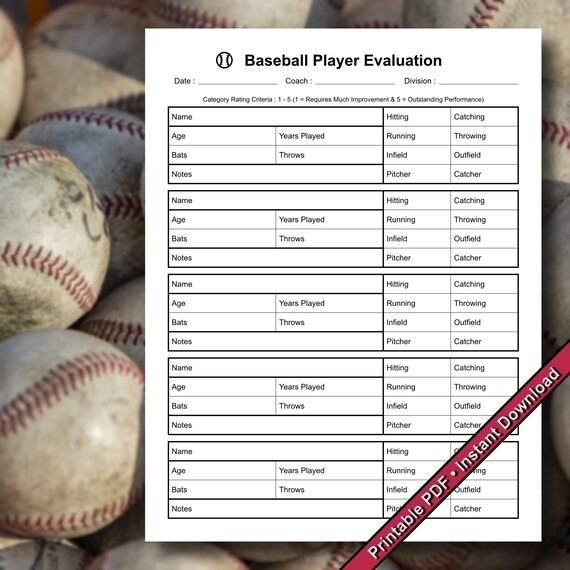
For an 11-year-old, a local draft or evaluation can decide between a Major Division team and a Minor League team. Selection procedures vary by league and division.
Families often call a move to a higher or lower level “playing up” or “playing down.” Those moves depend on the local program and Little League rules.
Can a player be on both Majors and Intermediate teams?Little League describes circumstances in which an eligible player can participate on both Major and Intermediate regular-season teams, subject to the applicable rules. The local league determines whether it operates and supports that arrangement.
When 5- and 6-year-olds can move beyond Tee Ball
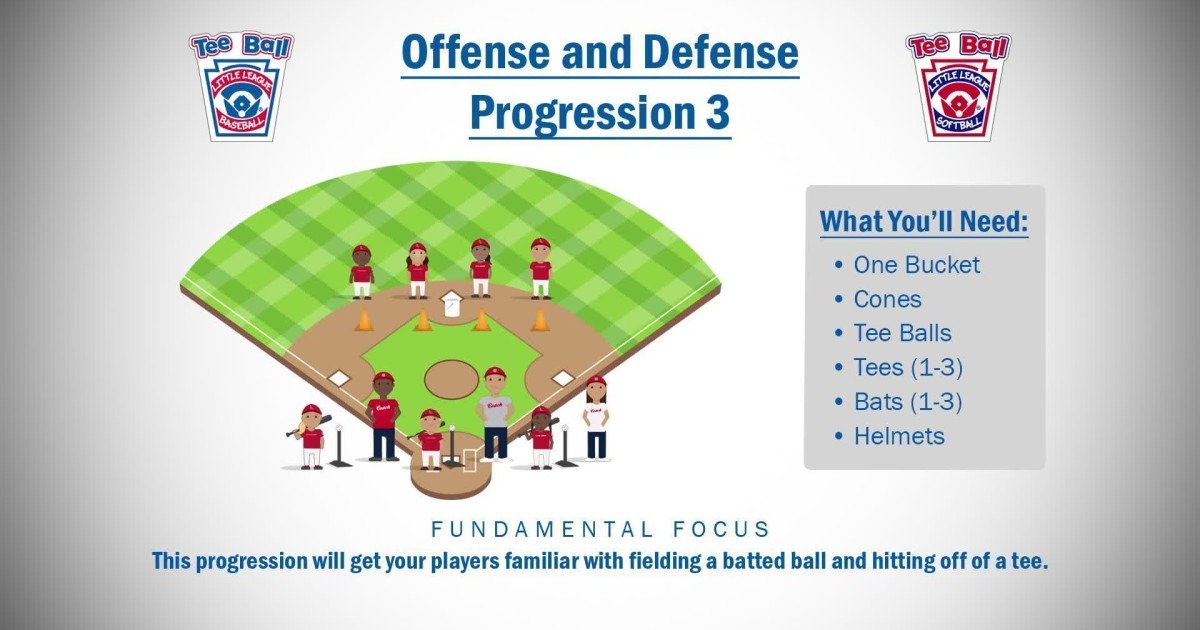
League-age-five and league-age-six children who have completed one regular season of Tee Ball can move to Minor League coach-pitch or machine-pitch if their local program offers it.
Tee Ball covers ages four through seven, so a six-year-old with a finished Tee Ball season can try coach-pitch and still qualify for Tee Ball by age.
A five-year-old entering baseball for the first time follows the local entry path. The coach-pitch and machine-pitch allowance doesn't extend automatically to player-pitch Minors.
The special rule for 12-year-olds who want to play Minors

A league-age-12 player normally follows the draft routes into Majors, Intermediate or Junior League. Playing in Minors requires a formal exception under Regulation V(a).
The official Regulation V(a) 12-year-old waiver form, updated March 6, 2023, requires agreement from the parent or legal guardian and the local league board, followed by written approval from the District Administrator. A conversation with a coach or a parent's signature alone doesn't complete the process.
An approved exception carries three restrictions:
- International Tournament: The player is ineligible for Little League's International Tournament, including the All-Star pathway.
- Promotion: The player cannot be promoted to Majors, Intermediate or Junior League for the balance of the season.
- Pitching: The player cannot pitch for the balance of the current season.
If the 2027 rules differ from the March 2023 form, the 2027 rules apply. Your local player agent or board can send the request to the District Administrator.
Why local leagues use names like Rookie, AA, AAA and coach pitch
Rookie, Farm, Minor A, AA and AAA are local names for divisions or subdivisions. Coach pitch, machine pitch and player pitch describe how pitches are delivered. Each league defines its own labels.
Two local programs show how much names and age ranges differ:
| Local league | Local label | Ages listed for that program |
|---|---|---|
| Laguna Hills Little League | Minor A | 7 to 9 |
| Laguna Hills Little League | Minor AA | 8 to 10 |
| Laguna Hills Little League | Minor AAA | 9 to 11 |
| East Marietta | Farm | 5 to 6 |
| East Marietta | Rookie | 7 to 8 |
| East Marietta | Minor | 9 to 10 |
| East Marietta | Major | 11 to 12 |
A family moving between leagues can find the same age under a different name or pitching format. For new players, parents and first practices, see choosing the right league and division.
For a child entering a local AA or AAA program, check the listed age band, how pitches are delivered, and the division's evaluation requirements. Older divisions can also depend on enough registrations to form teams.
Does fall baseball use the same age chart, and what about All-Stars?
Some local leagues use the following spring season's league-age chart for fall registration. East Marietta lists Fall 2026 and Spring 2027 under 2027 league age, so that program uses the August 31, 2027 baseball cutoff for both seasons.
All-Star tournament eligibility follows extra rules beyond regular-season placement. An “8U” label from an independent organization doesn't determine Little League Baseball eligibility.
Before registering, learn the local league's placement and payment process
Before you pay, find out whether the local program has a suitable place for your child, how it assigns teams, and what you agree to by signing up.
Find the program through Little League's official League Finder. Its registration materials and its player agent or registrar can answer the questions below.
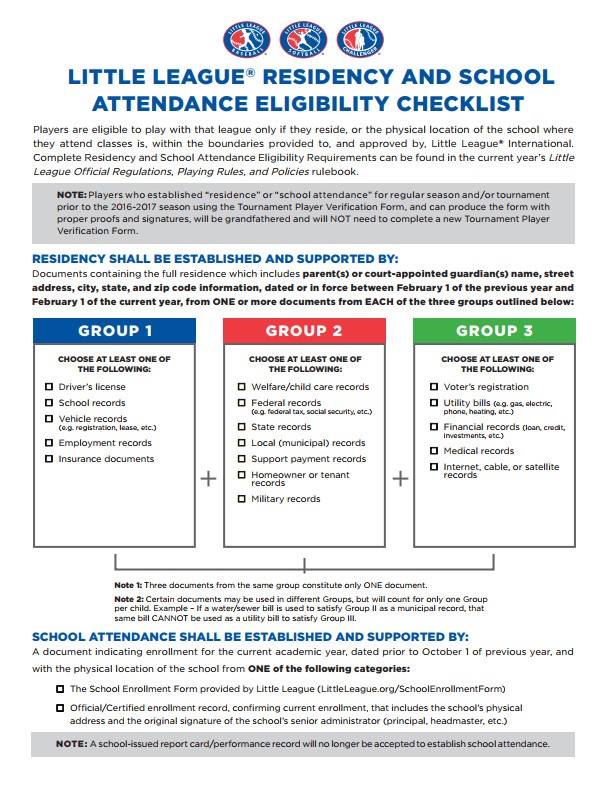
- Local eligibility: Does your child's address, school attendance or another participation rule qualify them for that league?
- Season and divisions: Which year does the registration cover, and which age-eligible divisions does the league run? Get the local names and pitching formats.
- Assessments and timing: Evaluations, a draft or another selection step may come before or after registration and payment. Ask which.
- Playing opportunity: What does registration secure? Does the level you want have teams, and when is the final assignment announced? This matters most for older first-time players.
- Exceptions: If the assignment relies on a special age rule, ask which approvals are required and how you will hear the decision.
- Registration terms: Read the documents, fees, cancellation rules and refund terms for that league before you pay.

Registration and roster placement may happen at different times. Laguna Hills Little League, for instance, describes eligibility documentation before team assignment in its drafted divisions. Families can understand costs and procedures even while the final team remains undecided.
Summerlin North Little League's Fall 2025 / Spring 2026 registration policy gives a refund example: missing a requested division did not automatically entitle the family to a refund.
A specific question to the player agent is more useful than a general request for placement advice:
My child will be league age [age] in 2027. If my child is not selected for the division listed on the form, what other playing option would your league offer?